
- Thank you received: 0
192 De Soto Fireflite (1959 -63)
9 years 1 month ago #7831
by Dinkinius
192 De Soto Fireflite (1959-63) was created by Dinkinius
As Meccano made a number of models of De Soto, Chrysler, Plymouth and Dodge automobiles between 1935 and 1979, I think it is rather fitting that we should recall the man who created this company, Walter Percy Chrysler before I introduce the main topic on the De Soto Fireflite.
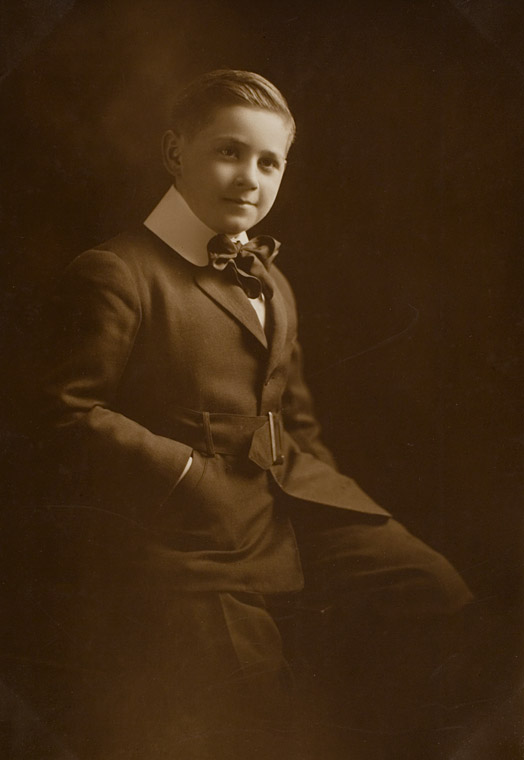 Walter Chrysler was born on 2 April 1875, in Wamego, Kansas, the son of Anna Maria (ne Breymann) and Henry Chrysler. He grew up in Ellis, Kansas, where his career as a machinist and railway mechanic in Ellis began. He then spent years working for various railway companies as a mechanic working his way up through positions such as foreman, superintendent, division master mechanic, and general master mechanic. On 6 June 1901, Walter Chrysler married his childhood sweetheart and the love of his life, Della Viola Forker, and they remained happily married until Della passed away on 8 August 1938.
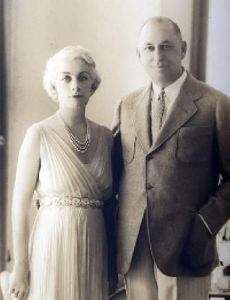 The peak of his railway career came when he became works manager of the Allegheny locomotive erecting shops of the American Locomotive Company (ALCO). Chrysler's automotive career began in 1911 on meeting James J Storrow, a banker who was a director of ALCO. Storrow asked him if he had given any thought to automobile manufacture. Chrysler had been an auto enthusiast for over five years by then and was very interested. Storrow arranged a meeting with Charles W Nash, then president of the Buick Motor Company, who was looking for a smart production chief. Chrysler resigned from ALCO and became works manager (in charge of production) at Buick in Flint, Michigan, a division of General Motors. He found many ways to reduce the costs of production, such as putting an end to finishing automobile undercarriages with the same luxurious quality of finish that the body warranted. In 1916, Chrysler was subsequently promoted as chief of Buick at a salary of US$10,000 a month, US$165,000 in today's value) initially for three years with a bonus of $500,000 worth of stock at the end of each year, a previously unheard of package. He ran Buick successfully for three more years. Not long after his three-year contract was up, he resigned from his job as president of Buick in 1919 as he did not agree with the vision for the future of General Motors. General Motors bought the stock he had been given for $10 million. Chrysler had started at Buick in 1911 on a salary of US$6,000 a year, and left one of the richest men in America. Chrysler was then hired to attempt a turnaround by bankers who foresaw the loss of their investment in the Willys-Overland Motor Company in Toledo, Ohio. He demanded, and received, a salary of US$1 million a year for two years, another astonishing amount at that time. When Chrysler left Willys in 1921 after an unsuccessful attempt to secure complete control, he acquired a controlling interest in the ailing Maxwell Motor Company. Chrysler phased out Maxwell and absorbed it into his new firm, the Chrysler Corporation, in Detroit, Michigan in 1925. In early 1928, Chrysler began negotiations with Dodge Brothers Auto Company to acquire their company that apart from the brand-name of Dodge, it also had another brand product, Plymouth. Chrysler wanted to enter these brands, Dodge and Plymouth in competition with its competitors Oldsmobile, Mercury, Studebaker, Hudson and Willys in the mid-price class. Dodge Brothers and the brand names of Dodge and Plymouth finally came into the Chrysler family on 29 May 1928. The first Plymouth under Chrysler ownership, aimed at competing with Chevrolet (GM) and Ford was introduced to the public in New York on 7 July 1928. In keeping with other auto manufacturers Chrysler wanted its own home-grown, lower priced version of Chrysler products and so the De Soto Division was established on August 4, 1928, and introduced its first product later that year for the 1929 model year. The Division was named after the Spanish explorer Hernando De Soto. The De Soto logo featured a stylized image of the explorer who led the first European expedition deep into the territory of the modern-day United States (Florida, Georgia, and Alabama), and was the first documented European to have crossed the Mississippi River.
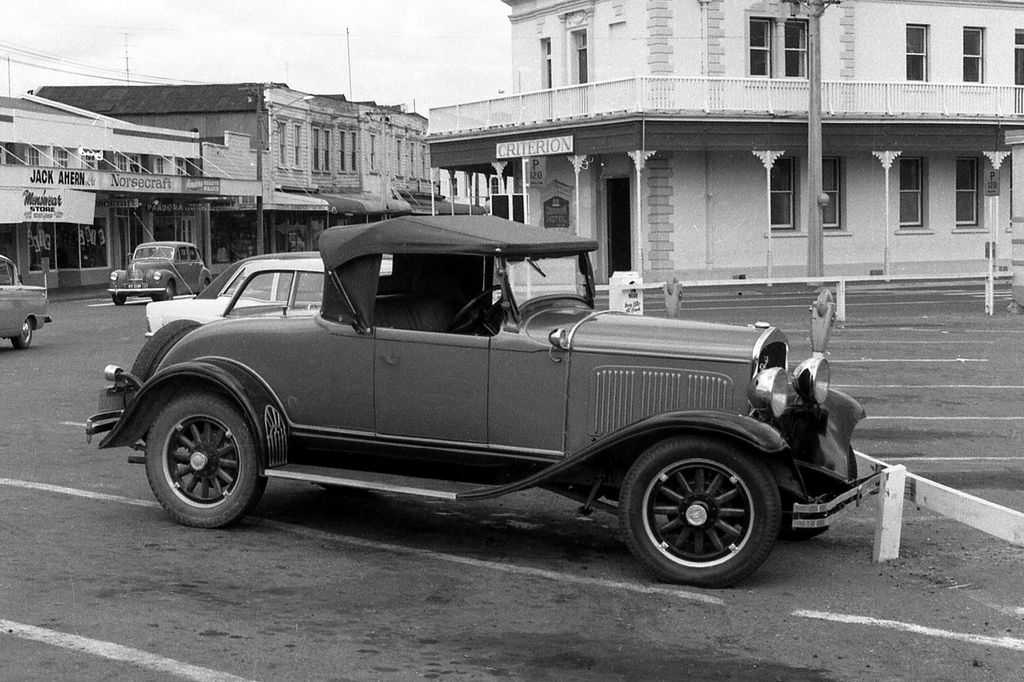 1929 De Soto Coupe - Sydney, Australia For Walter Chrysler, 1928 was a very busy year, the acquisition of Dodge Brothers, the establishment of the Chrysler De Soto brand and finally the financing by Chrysler of the construction of the unique Chrysler Building in New York, which was completed in 1930 and is still an icon today in company with the Empire State Building. The inaugural De Soto model year sales in 1929 totaled 81,065 cars, a first year record in the U.S. that lasted until the 1960 Ford Falcon. Shortly after De Soto was introduced, Chrysler completed the acquisition of the Dodge Brothers auto company, giving Chrysler two mid-priced makes. Initially, the two-make strategy was relatively successful, with De Soto priced below Dodge models. Despite the economic times, De Soto sales were relatively healthy, pacing Dodge at around 25,000 units in 1932. In 1933, Chrysler reversed the market positions of Dodge and De Soto in hopes of boosting Dodge sales. By elevating De Soto, it received Chrysler's streamlined 1934 Airflow bodies but with minor refinements and styling. However, with the car mounted on
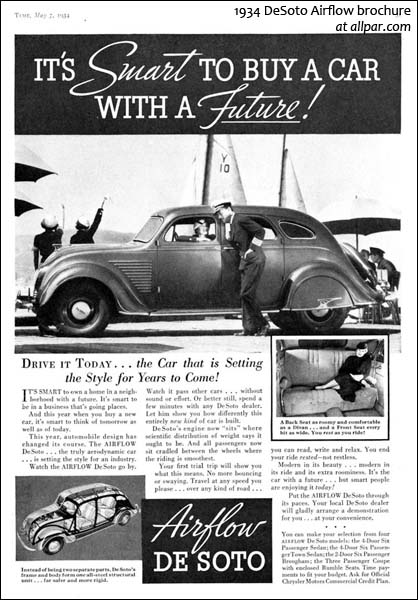
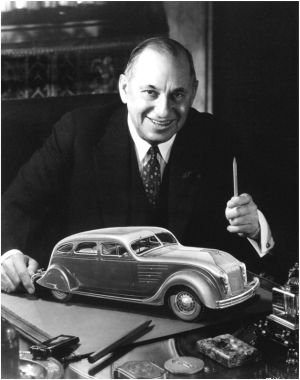 Walter Chrysler posing with a model of the Chrysler Airstream the shorter De Soto wheelbase, the design was a disaster and was unpopular with consumers. Unlike Chrysler, which still had more traditional models to fall back on, De Soto was hobbled by the Airflow design until the 1935 Airstream arrived, shown below.
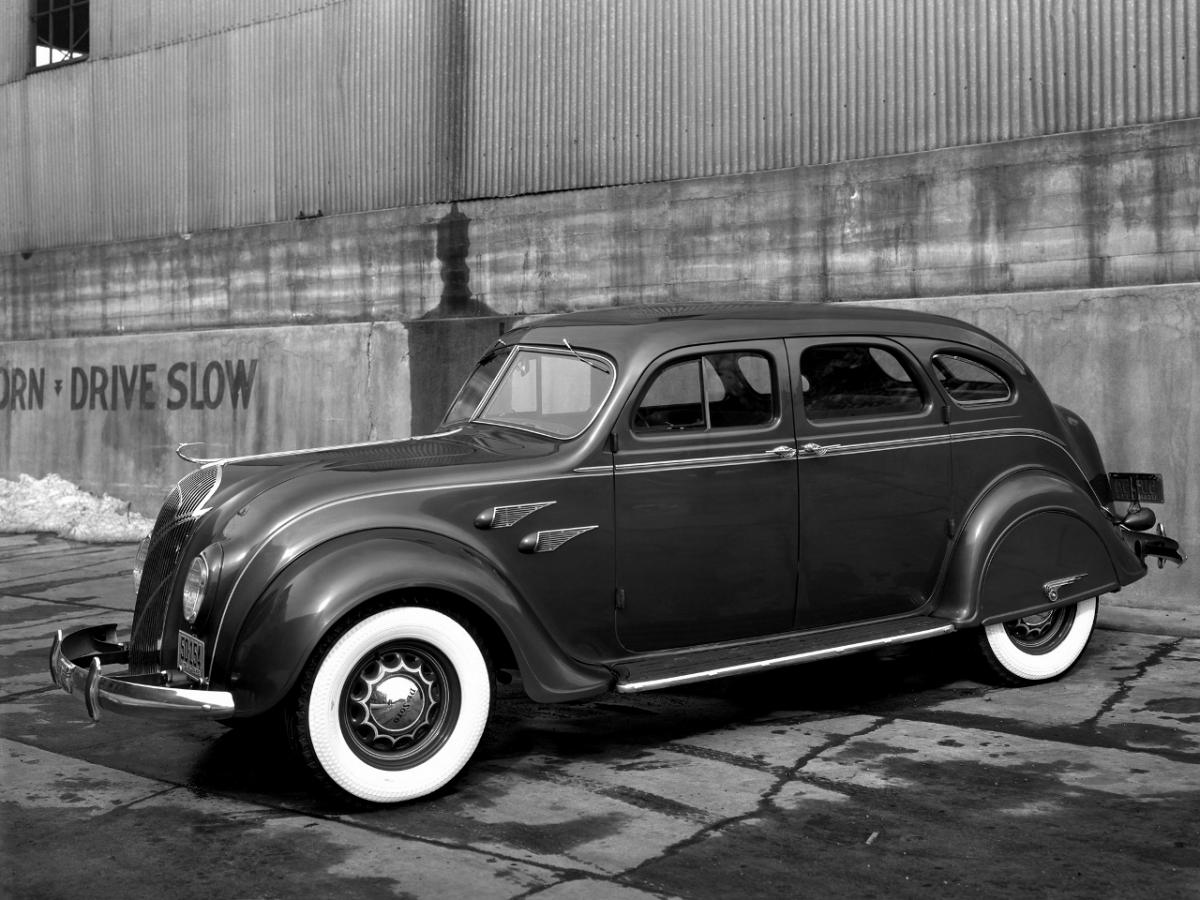 With some design changes to the front-end the result becoming the 1936 base model.
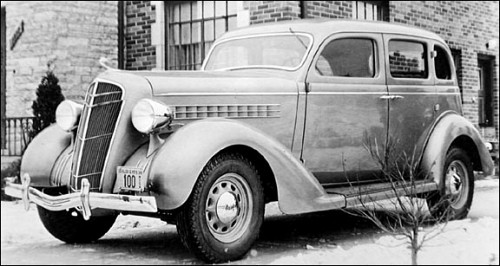 In this photo-essay, we now come to a 1938 model Chrysler that most, if not all Dinkyholics shouldrecognize
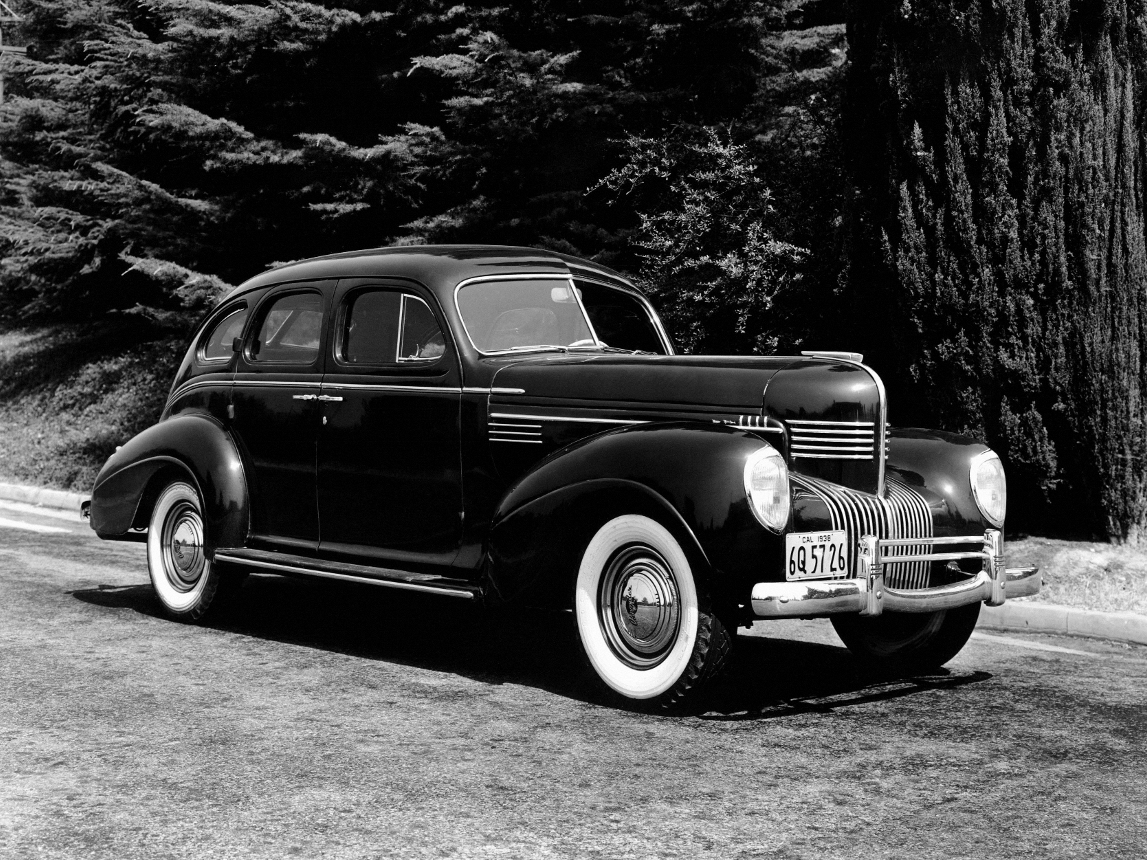 as the Dinky Toys 39e Chrysler Royal Sedan, although the above image is that of a Chrysler New Yorker which externally was almost identical. Walter Percy Chrysler passed away on 18 August 1940. His wife Della had passed away in 1938 which caused his health to suffer considerably resulting in a severe stroke from which he never recovered. However, what Walter Chrysler created, the Chrysler Corporation continued up to and throughout World War Two. The 1942 De Soto incorporated a unique feature, powered pop-up headlights, a first for an American mass-production vehicle. (The Cord 810 introduced dashboard hand cranked hidden headlamps in the 1936 model year.) De Soto marketed the feature as 'Air-Foil' lights ('Out of Sight Except at Night'). De Soto returned to civilian car production at the end of WW2 when it reissued its 1942 models as 1946 models, but without the hidden-headlight feature, and with fender lines extending into the doors, like other Chrysler products of the immediate postwar period.
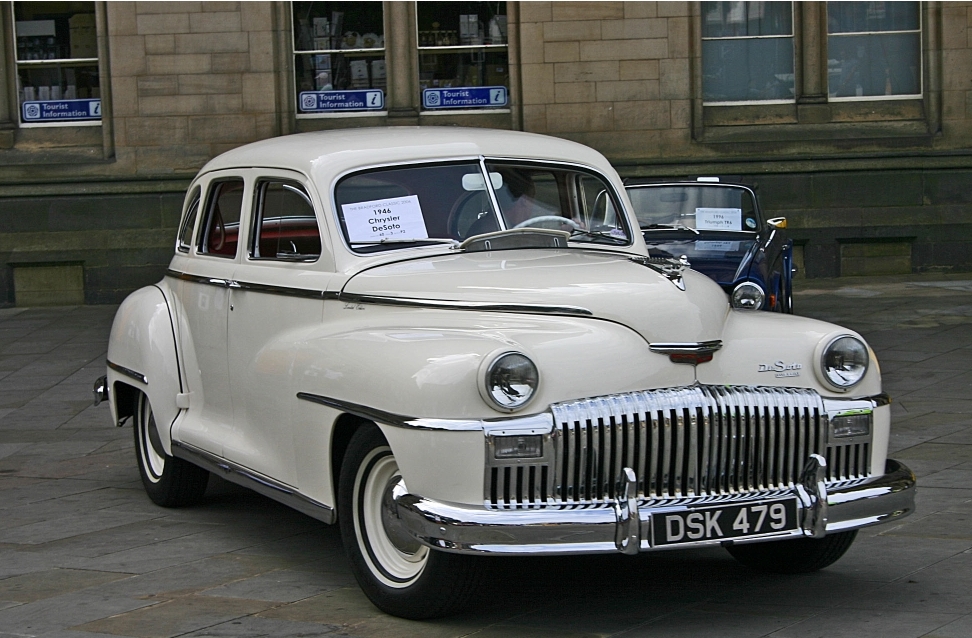 1946 De Soto Sedan
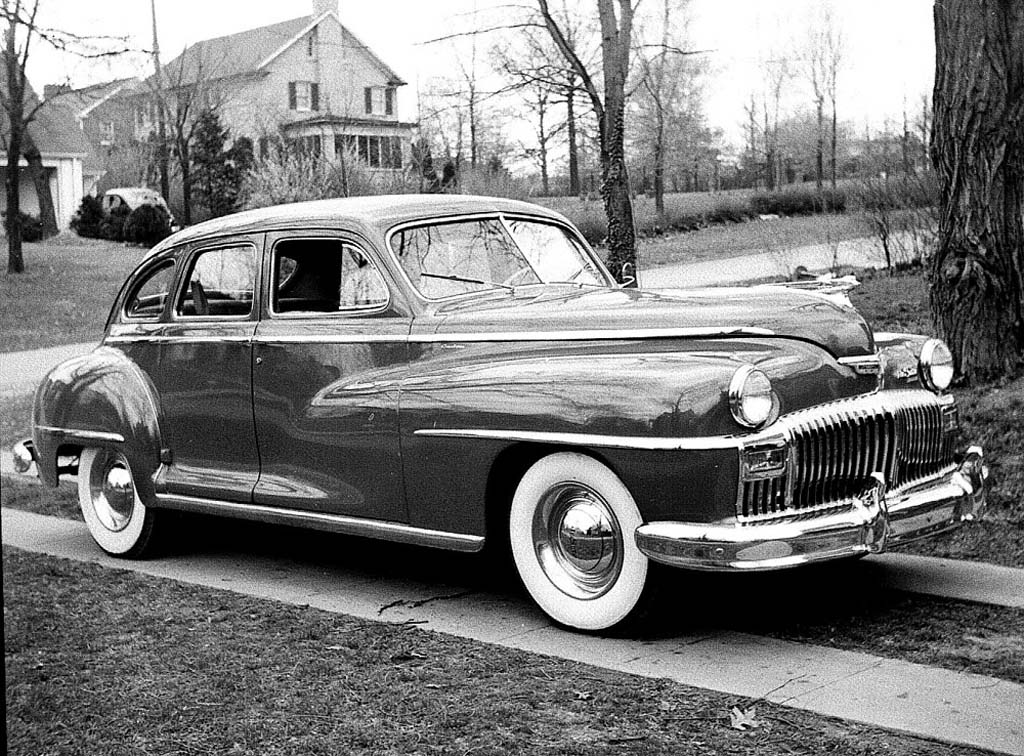 1948 De Soto Town Car
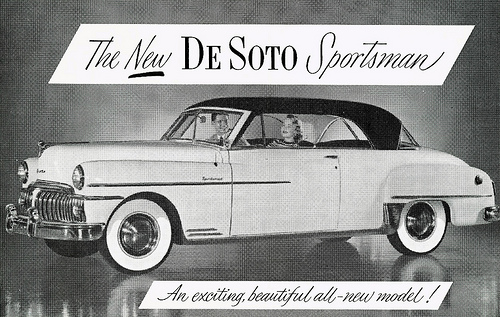 1950 De Soto Sportsman Sedan
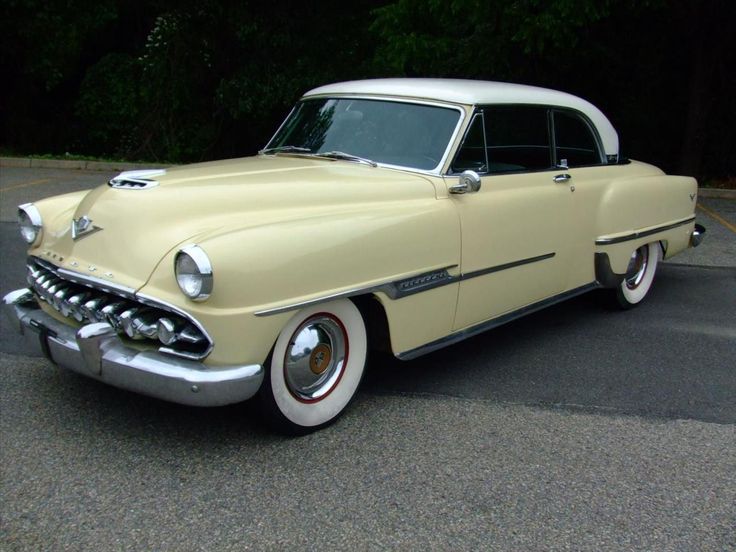 1954 De Soto Firedome Sports Sedan In 1955, along with all Chrysler models, De Sotos were redesigned, given a flatter bonnet (hood), a sweeping side paneland given names denoting their different styling and features, Firesweep, Firedome (previously named) and Fireflite. The photograph below is that of the 1955 Fireflite.
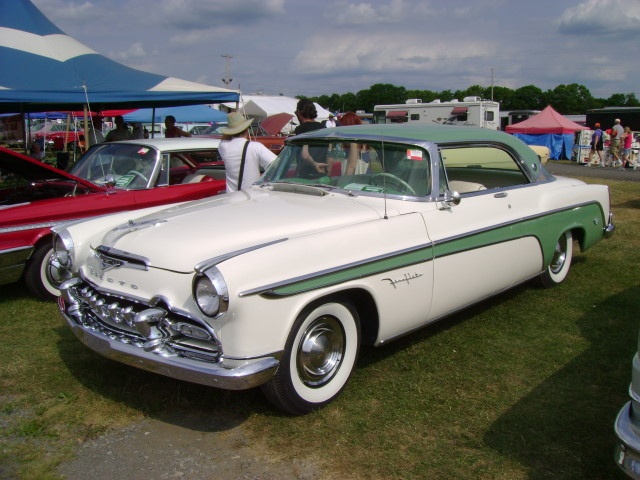 De Sotos sold well through the 1956 model year. That year, for the first and only time in the marque's history, it served as Pace Car at the Indianapolis 500. For the 1956 update the De Soto was designed with tail- finsfitted with triple taillights, and consumers responded by buying record numbers.
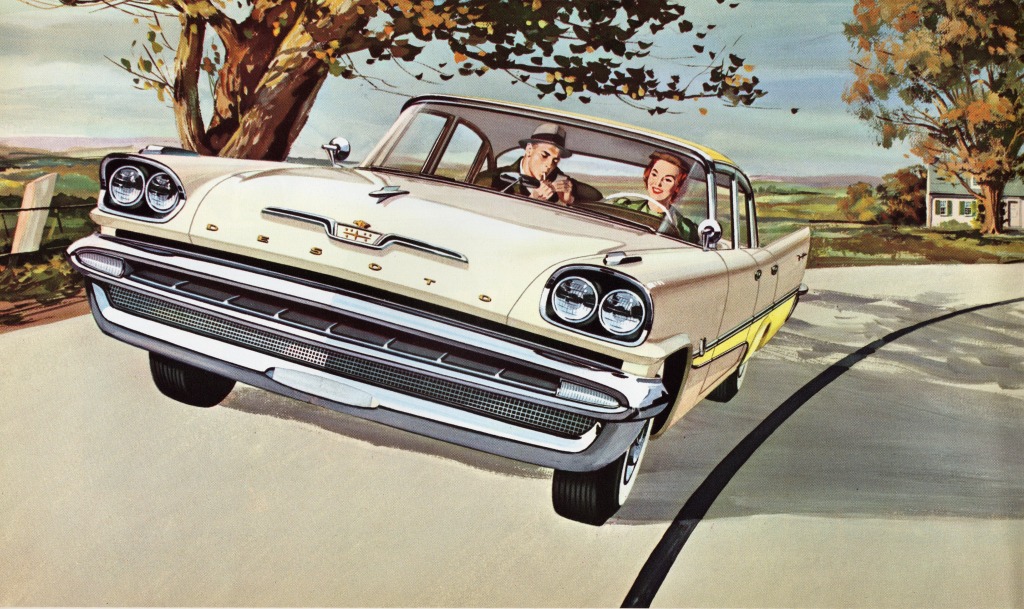
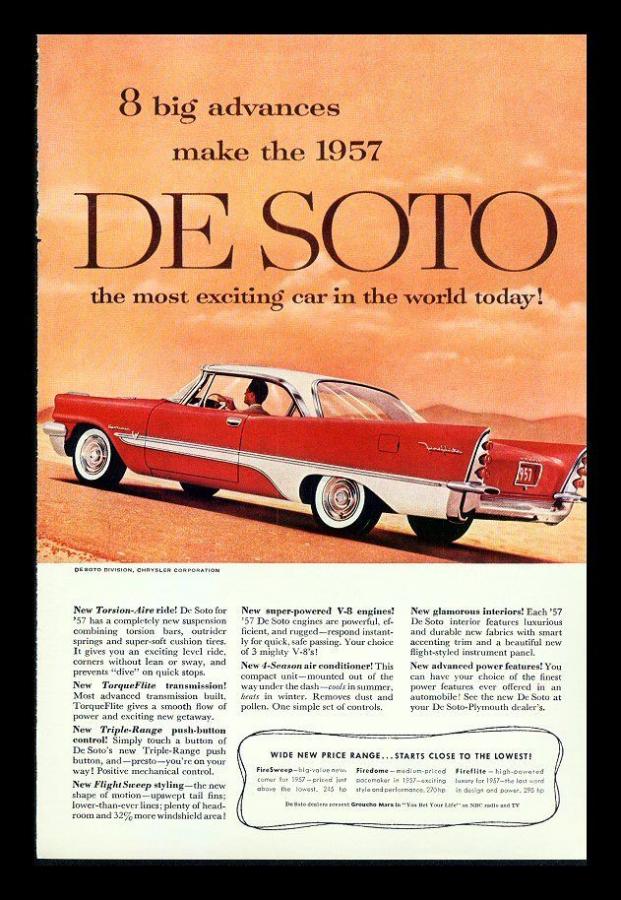
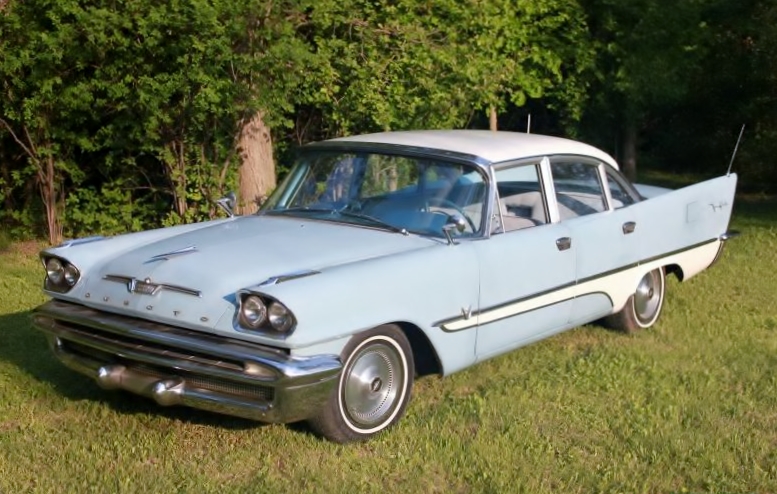
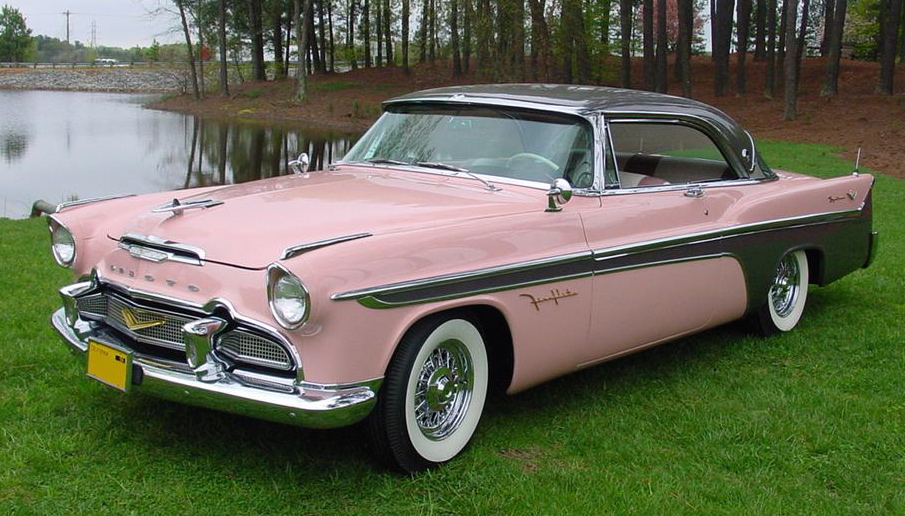 The Fireflites appearance for 1957 was redesigned with the help of the Chrysler Corporation's head stylist, Virgil Exner. The design was bold and radical with larger tail fins, dual oval exhausts and triple-lens taillights. The tail fins were not only aesthetic, but helped to stabilize the car at high speeds.
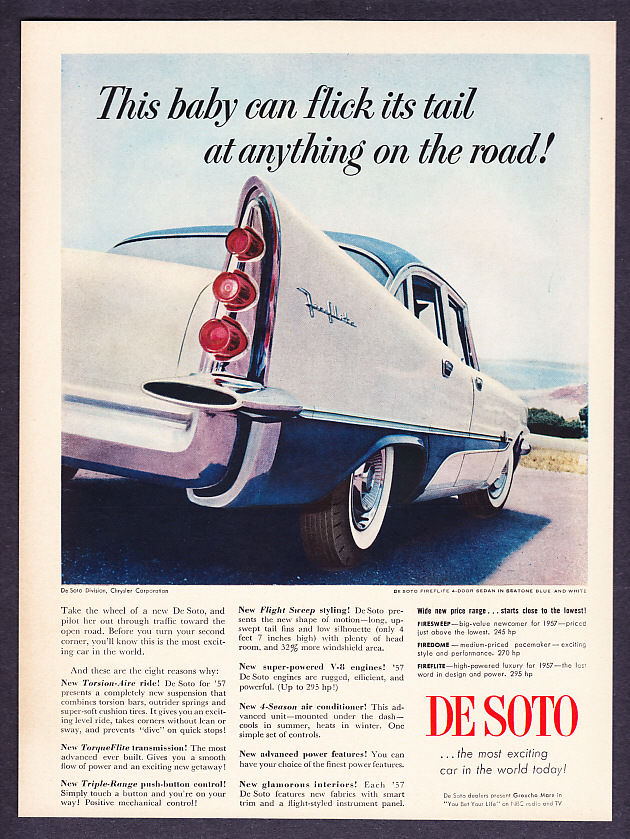 The size and sweep of the tail-fin was also used to good advantage in its advertising campaign! As an aside, here in Australia, the Chrysler Plant based in Adelaide, produced a new model in 1957 entirely designed in Australia with very little input from the parent company that was ultimately named the Chrysler AP1 Royal. As one can see with the photograph below the influence of De Soto with its side panel and fins is very noticeable, although the latter were not as large as on the 1957 De Soto though!
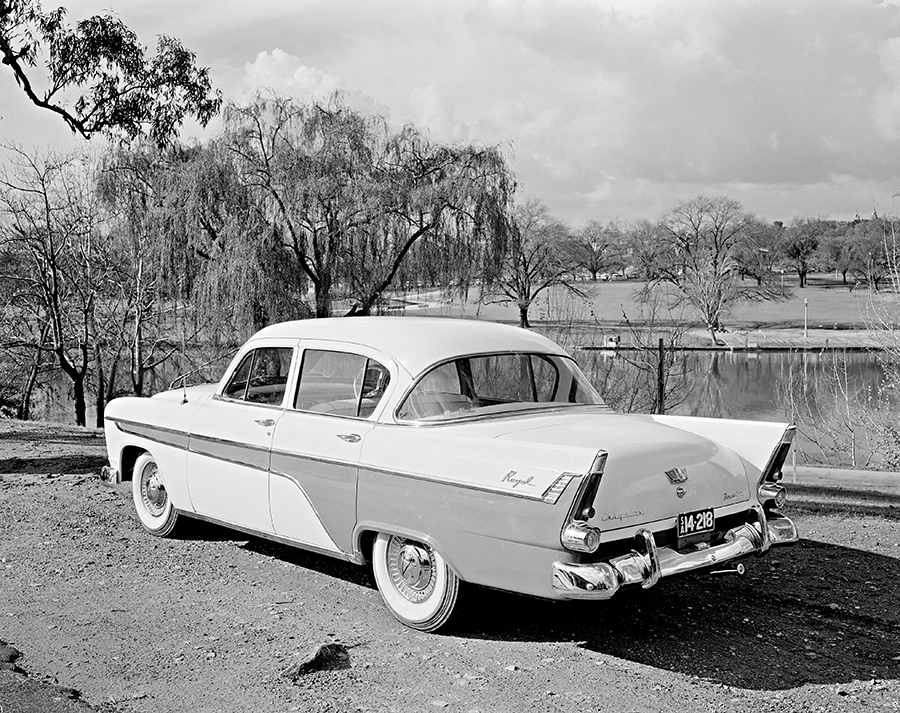 The De Soto for 1957 was a well integrated design, with three variations: the smaller Firesweep body placed on the concurrent Dodge 122-inch wheelbase chassis with Dodge front fenders; and the Firedome and Fireflite based on the larger 126-inch wheelbase chassis shared with Chrysler. The 1957 model became the 1958 Dinky Toys 192 De Soto Fireflite with the design of the Fireflite having been initiated on 16 May 1957 through to 2 August 1957. On 18 March 1960, suspension was added, although I have never seen a 192 with suspension. (See comments below on the 258 U.S.A. Police Car.)
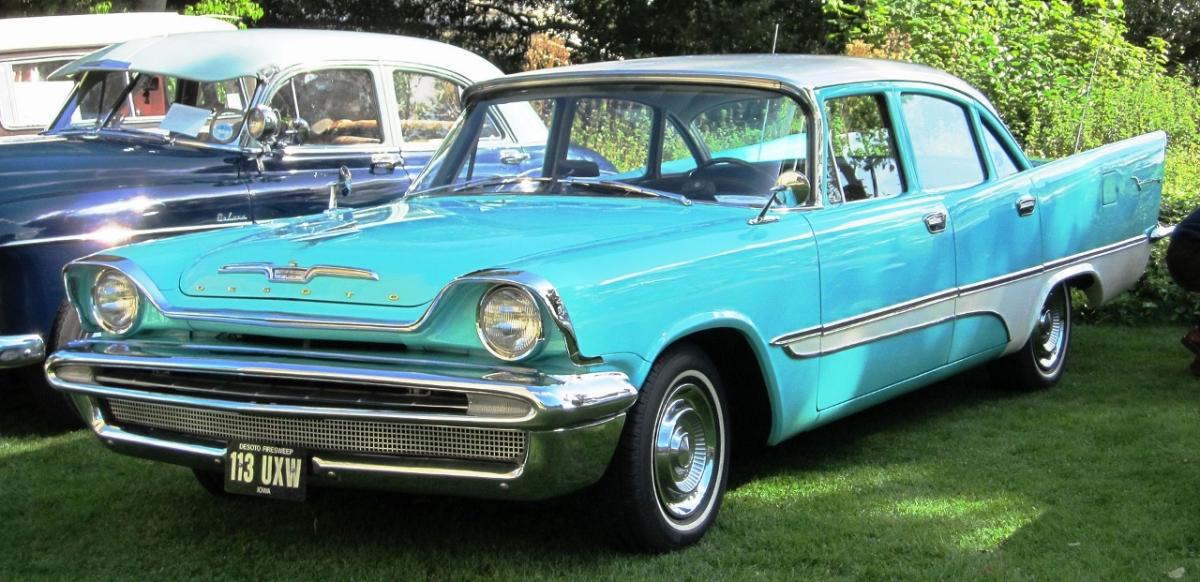
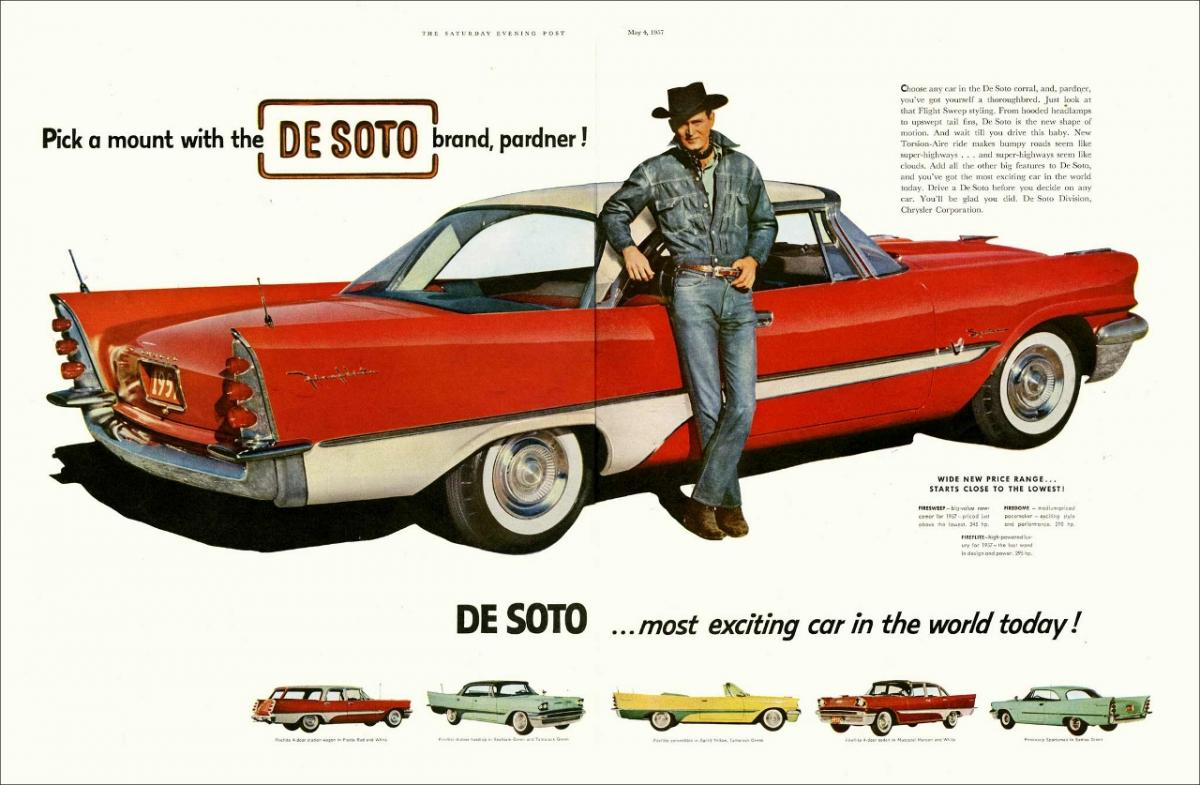
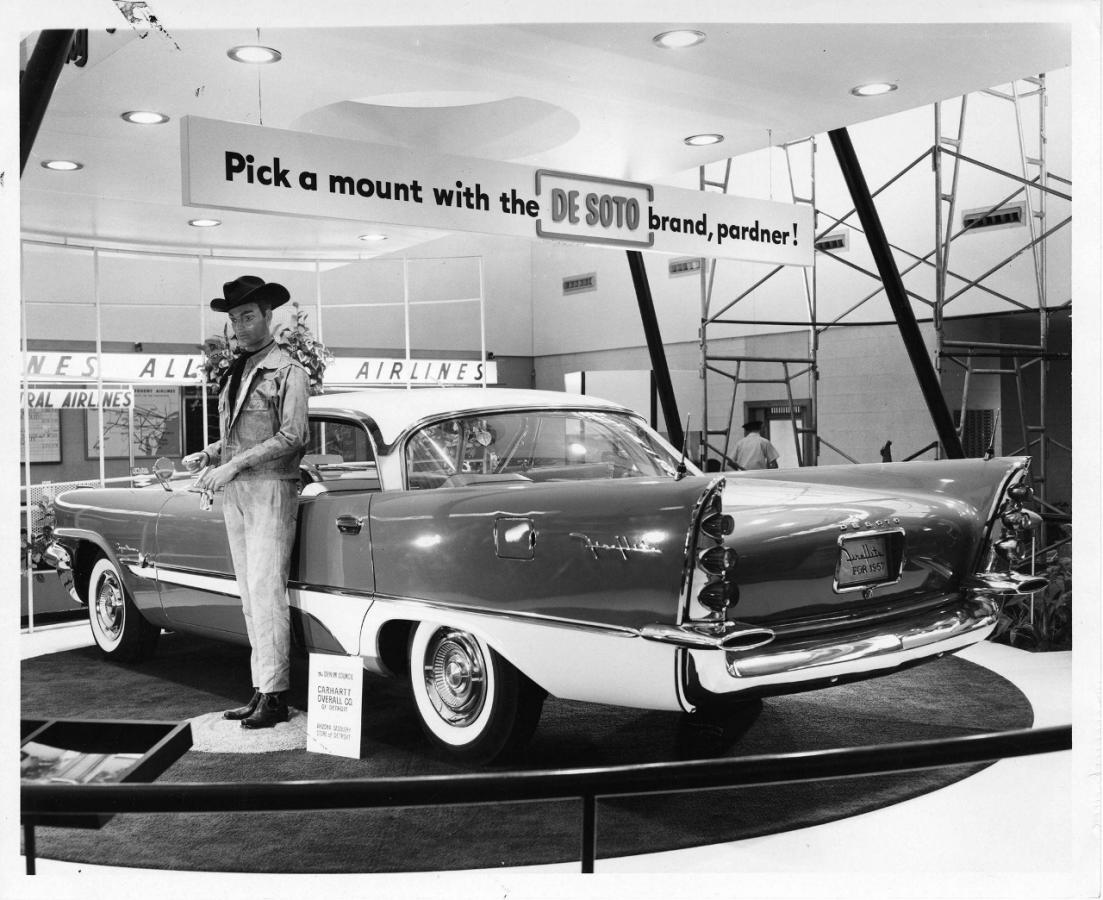 The showroom mimicking the magazine advertisement! The 1958 economic downturn hurt sales of mid-priced makes across the board, and De Soto sales were 60 percent lower than those of 1957 in what would be De Soto's worst year since 1938. The sales slide continued for 1959 and 1960 and rumors began to circulate De Soto was going to be discontinued.
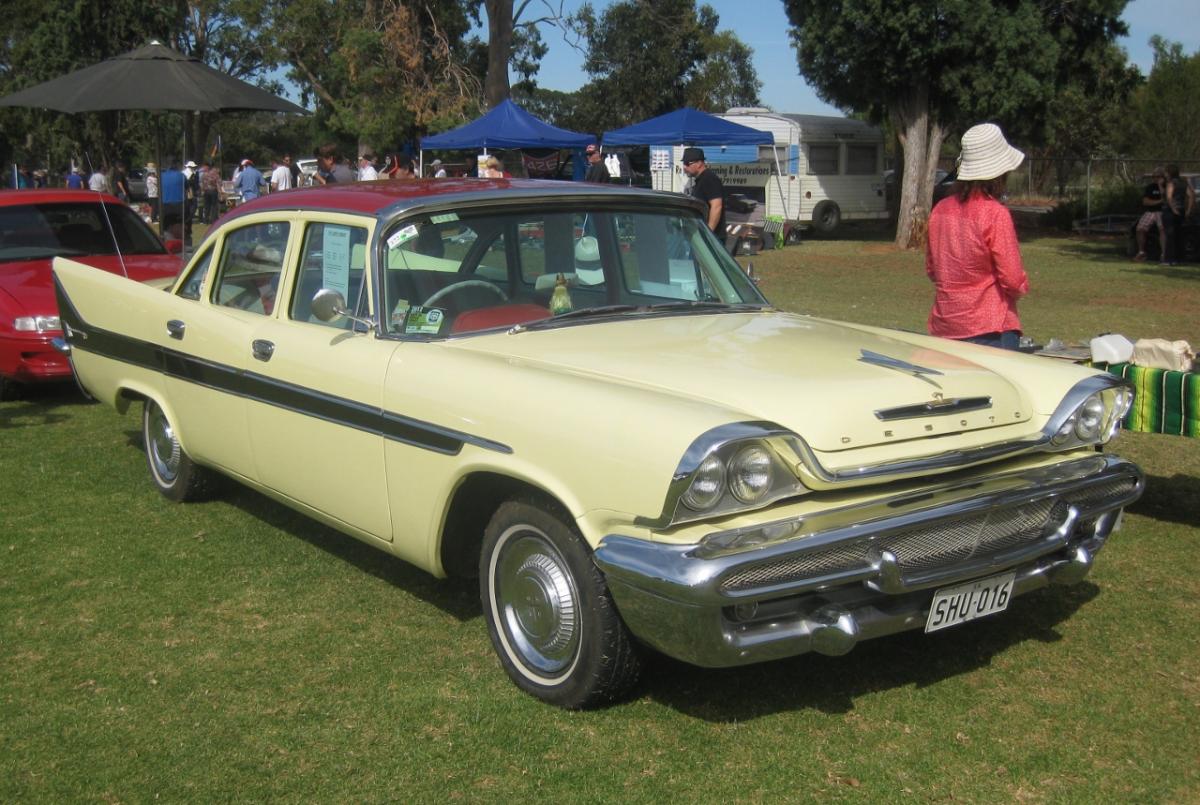 The 1958 De Soto Firesweep assembled in the Adelaide factory of the Chrysler Australia Corporation. The 1959 models were only given a limited 'make-over' as Chrysler was re-considering all aspects of their various brands, including Dodge, Plymouth, Chrysler and De Soto and by late 1960, rumors were widespread that Chrysler was moving towards terminating the brand, fueled by a reduction in model offerings for the 1960 model year.
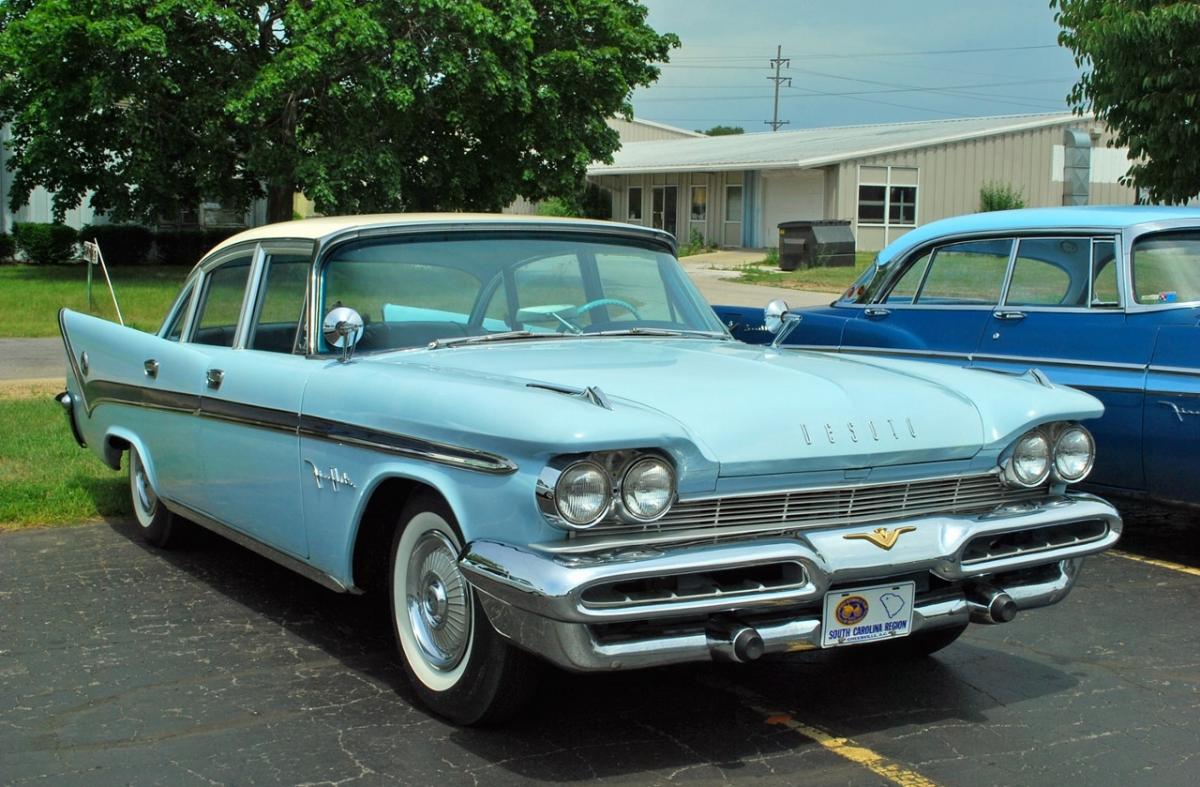 The 1959 De Soto Fireflite Sedan For 1960, the designers moved well away from the previous three years, and tried something entirely different. It was also the last year when the individual designations of Firesweep, Firedome and Fireflite were used. The end result was a model that just did not look right, and buyers were not convinced as to its merits whichever brand name they selected.
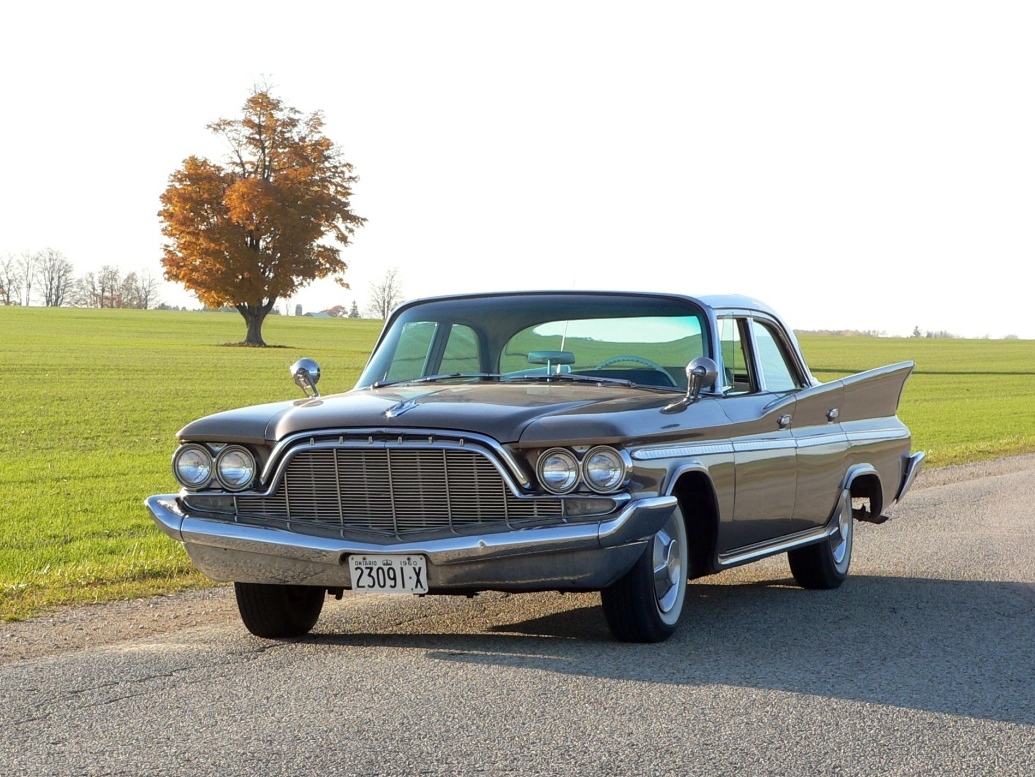 For 1961, apart from the De Soto losing its series designations entirely, only a two-door hardtop and a four-door hardtop were offered. The final decision to discontinue the De Soto brand was announced on November 30, 1960; just forty-seven days after the 1961 models were introduced. At the time, Chrysler warehouses contained several million dollars worth of De Soto parts, so the company ramped up production in order to use up the stock. Chrysler and Plymouth dealers, which had been forced to take possession of De Sotos under the terms of their franchise agreements, received no compensation from Chrysler for their unsold De Sotos at the time of the formal announcement. Chrysler's dealer network also had an effect on the termination of De Soto. Following World War Two, Chrysler had a large number of dealers that carried two or more Chrysler makes, with De Soto-Plymouth and ChryslerPlymouth dealerships being the most common. However, as Chrysler attempted to spin Plymouth off into stand-alone dealerships, existing dealers typically chose to become higher-volume Plymouth dealerships over the slower-selling De Soto brand, leaving the marque with a weakened dealer network and fewer outlets selling its cars. Also, the De Soto Division's failure to adjust to changing market trends by introducing a new compact car model in 1960 as had its GM and Ford counterparts, as well as its own Dodge and Plymouth siblings did, also hastened its demise. MECCANO AND THE No.192 1957 DE SOTO FIREFLITE Chrysler and Meccano had a very long relationship, going back to the 1934 Chrysler Airflow which Meccano released initially in February 1935 as 22g Streamline Tourer and 22h Streamline Saloon. The 22h was in effect a Chrysler Airflow. In June 1935 an almost identical model as the 22h was released, 30a Chrysler Airflow with a price increase of 3d, which covered additional features such as silver plated grille and front and rear bumpers. From a relationship point of view, a Chrysler product was modelled by Meccano for most of the production time frame for Dinky Toys, 1935 to 1940 then came the war and the temporary cessation of Dinky Toys manufacture, resumed in 1946 through to 1952 with the Chrysler Airflow and Royal. Then there was a break until 1956 and from then until 1969, a Chrysler product graced the Dinky Toys catalogues and price lists. Another period then arrived between 1970 and 1977 when no Chrysler product was listed, but in 1977 a new casting in the shape of a 1976 Plymouth Gran Fury arrived on the scene at Binns Road (another example when a Chrysler product came on the toy shelves at the same time the real car was in production) which was used as a Police vehicle, Stock Car and a New York cab with all three versions being among the last to leave the Binns Road factory. It was therefore very fitting that the last Dinky Toys included a Plymouth (Chrysler) product. Returning to December 1958 when Meccano released its very own De Soto Fireflite with a full page advertisement, as was the usual practice, on the rear cover of that months issue of MECCANO MAGAZINE.
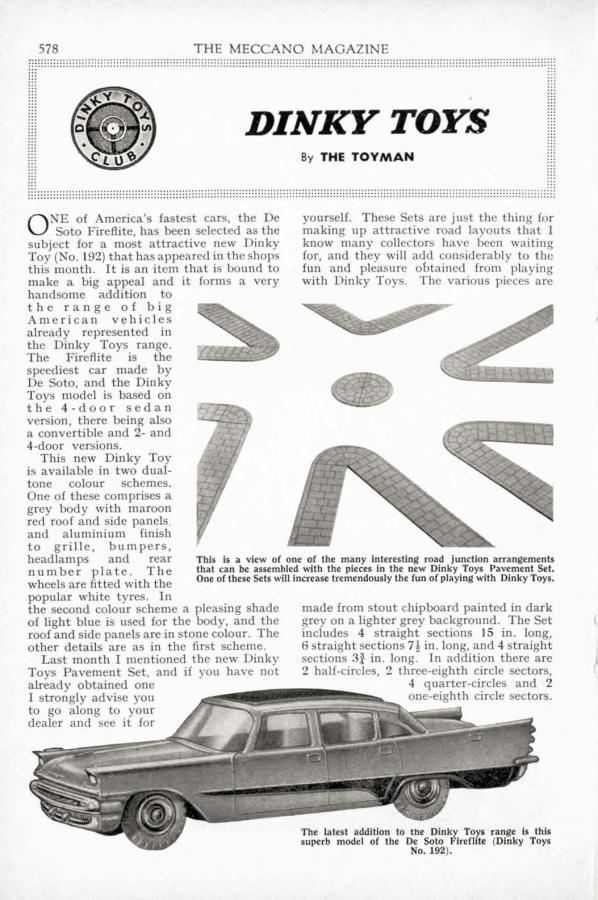
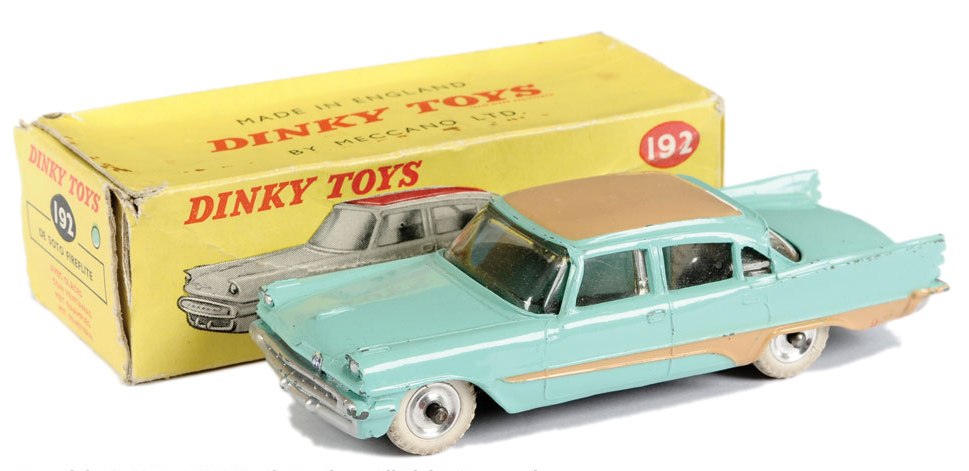
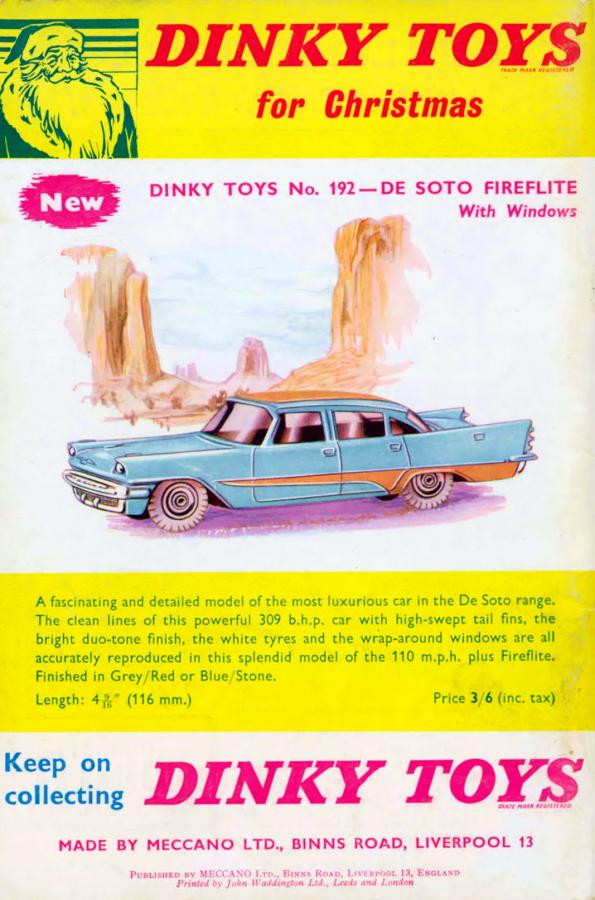 This is what The Toyman had to say about this new model: One of Americas fastest cars, the De Soto Fireflite has been selected as the subject for a most attractive new Dinky Toys (No. 192) that has appeared in the shops this month. It is an item that is bound to make a big appeal and it forms a very handsome addition to the range of big American vehicles already represented in the Dinky Toys range. The Fireflite is the speediest car made by De Soto, and the Dinky Toys model is based on the 4-door sedan version, there being also a convertible, and 2 and 4-door versions. This new Dinky Toys is available in two dual-tone colour schemes. One of these comprises a grey body with maroon red roof and side panels, and aluminium finish to grille, bumpers, headlamps and rear number plate. The wheels are fitted with popular white tyres. In the second colour scheme a pleasing shade of light blue is used for the body and the roof and side panels are in stone colour. The other details are as in the first scheme.
 Apart from showing how the upper colour is extended to the door line, the following image shows the colour green, not turquoise, that Meccano should have used. In the defence of Meccano, it is possible this shade of green was not in their inventory and a special order cost would have had to have been added to the final retail price of the model. So, we the buying public had to accept the turquoise Meccano used.
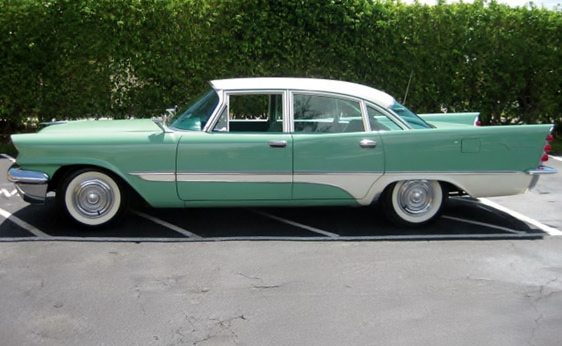
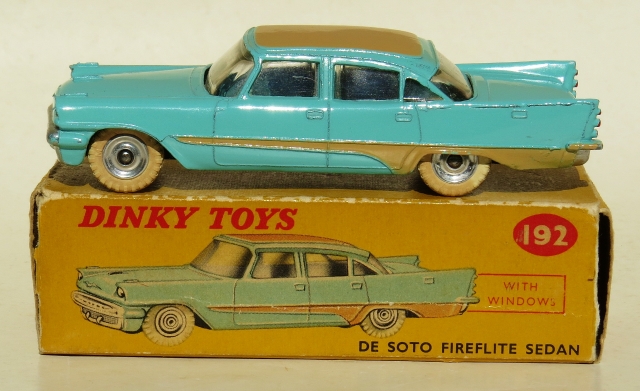 With Dinky having selected the two main De Soto colours of grey and light blue, although I would call this more of a turquoise-green, these colours almost matched those referred by De Soto as Dove Grey and Seafoam Green as shown with the De Soto colour chart below.
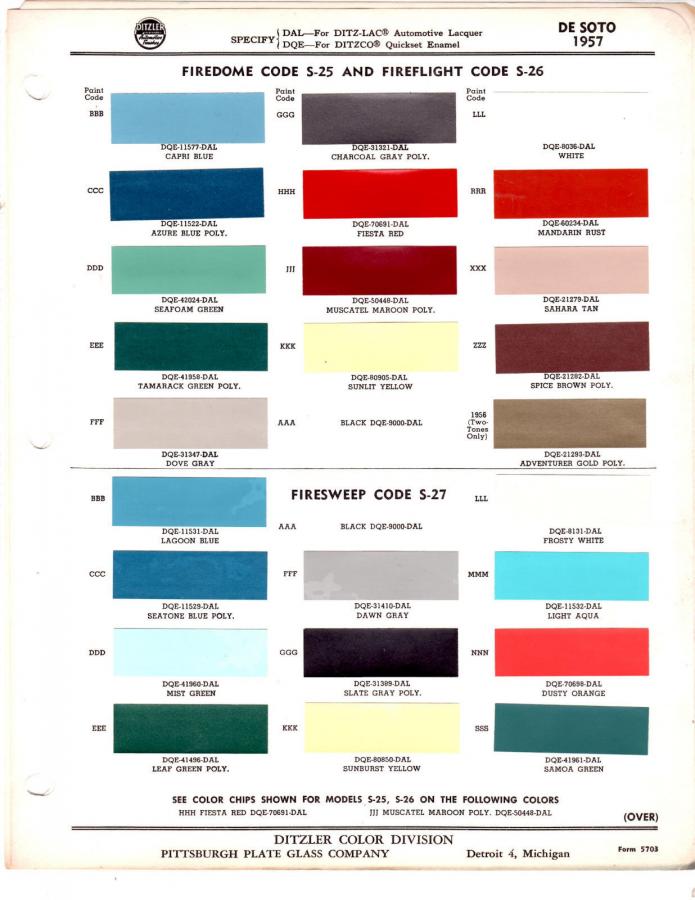 With the Dove Grey version, the other colour for the roof and side flash could match Muscatel Maroon in the colour chart. But the other colour scheme which matches Seafoam Green the stone colour quoted by The Toyman was never used for the Fireflite and I do not understand why this colour was selected and not another in the Fireflite range. Another unusual Meccano-effect is in fact the design of the positioning of the roof colour as a separated colour, as the real De Soto never had a layout like that shown with the Dinky Toys model. The roof colour extended from the top of the windscreen, doors and back window, not in the manner shown with the 192.
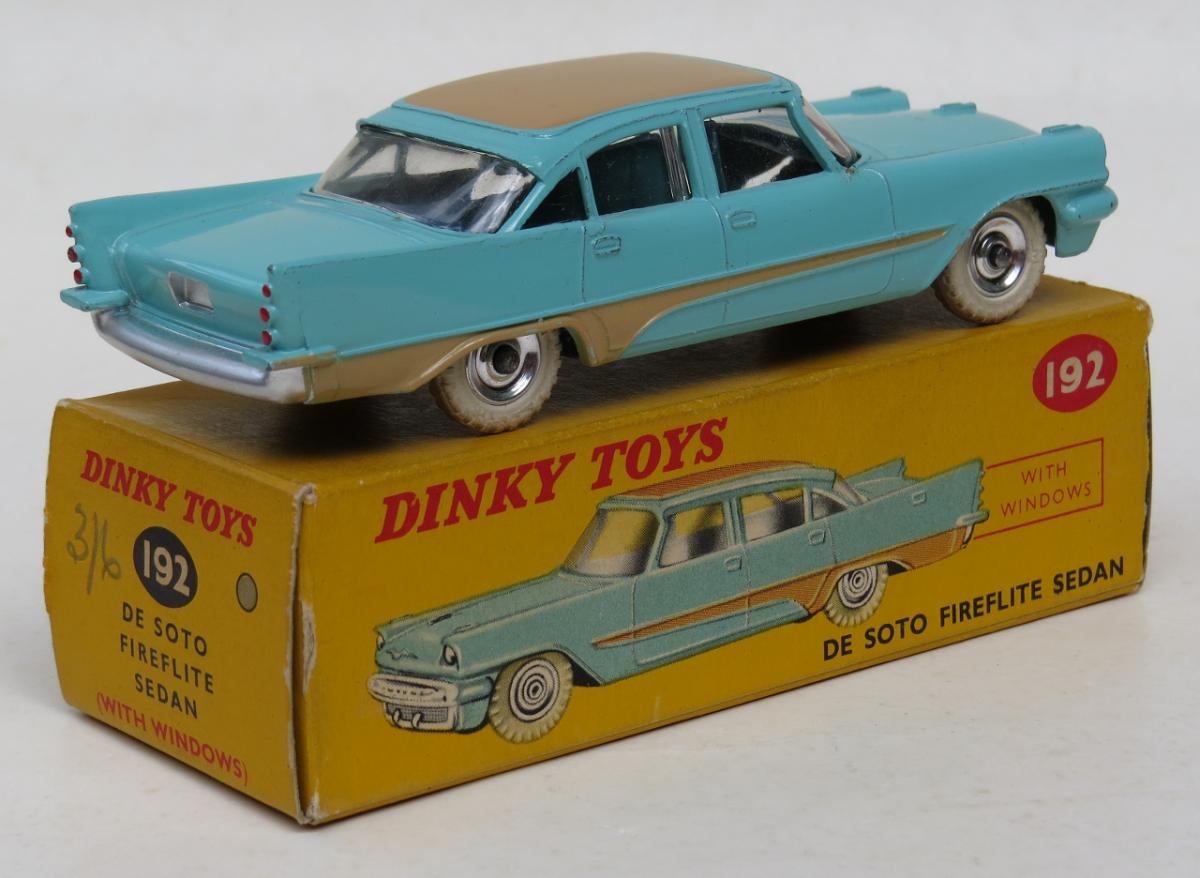 I am not really certain as to the reason Meccano designed the roof colour with its raised edge away from the windscreen and windows which was not used with the prototype as shown below.
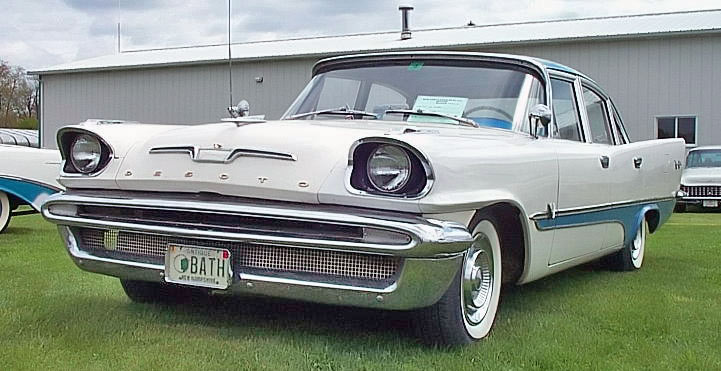
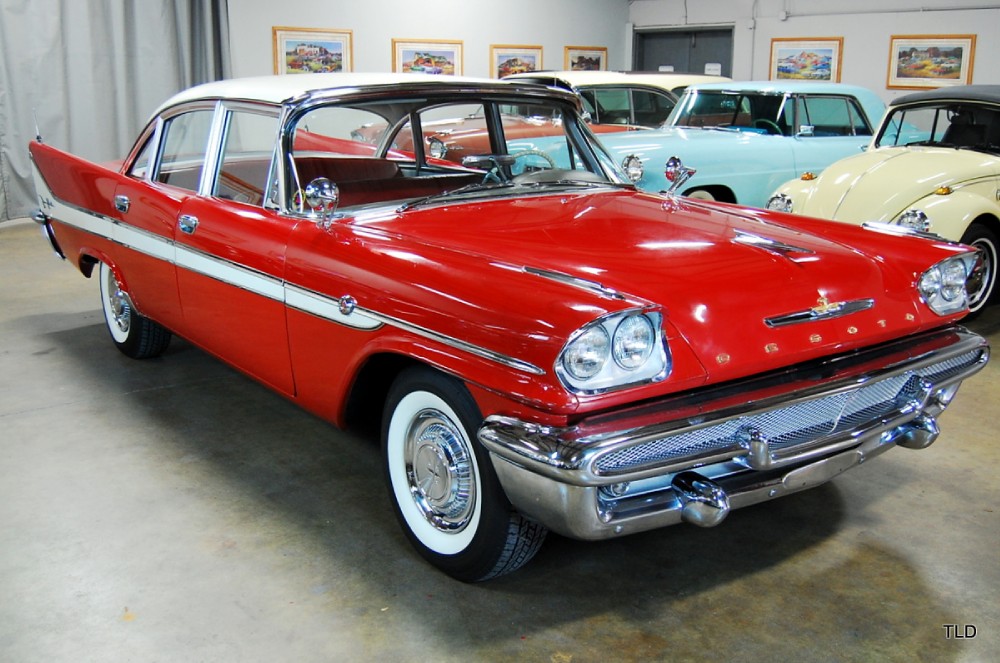 The above Fireflite has quad/dual headlights, which differs from the single headlight on both sides selected by Meccano which may appear to be a mistake, but not so, and the following provides an explanation which formed part of a brochure issued by De Soto.
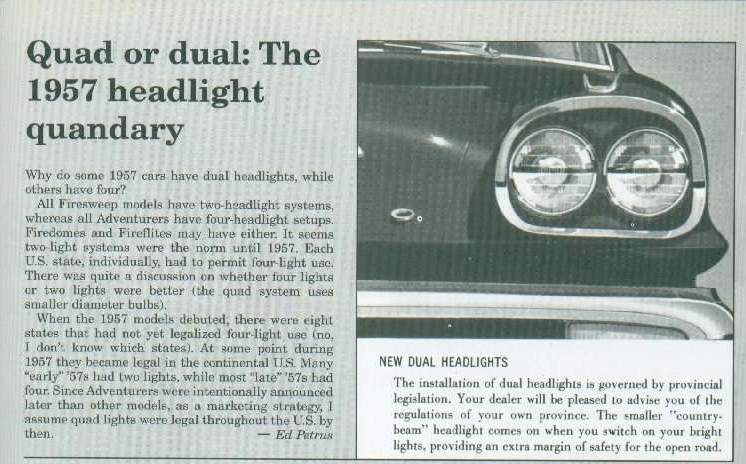 Purchasers of De Soto Firedomes and Fireflites were given a choice of having quad or dual headlights which was based on the home state of the purchaser and whether four headlights had been legalised which they were not in eight States at the beginning of 1957. Meccano chose to make their model with single headlights at the time the drawings were underway in the first half of 1957. THE BOXES
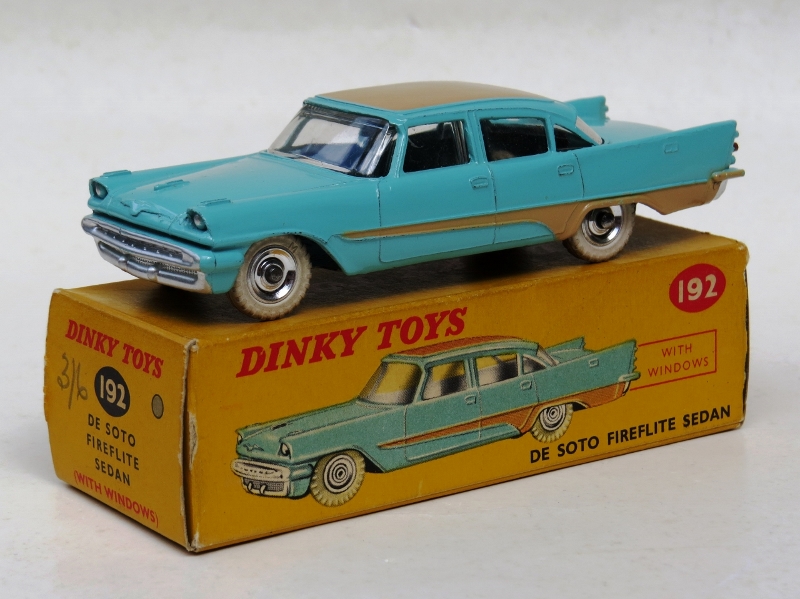
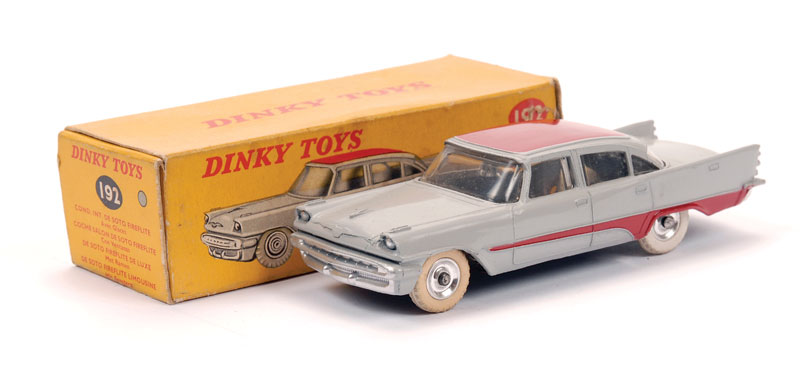 Over the life of the model, it was packaged in four styles of boxes. The first was the above that had an artists drawing depicting both colour schemes with a colour spot on each end denoting the colour of the model inside the box. The other three box styles were as follows:
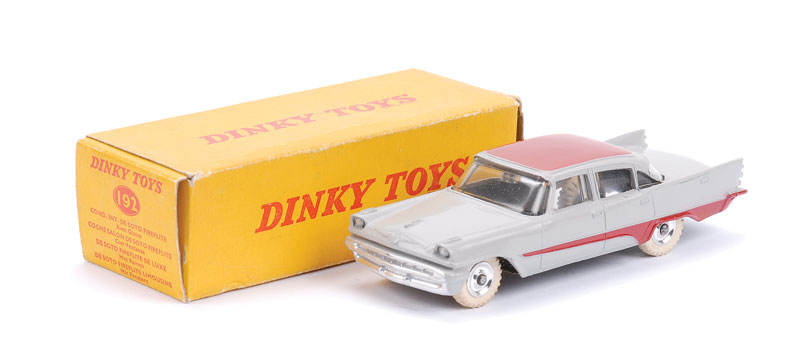 This plain yellow box, judging on prices seen on a number of examples, was issued during 1959 and early 1960. The third style of box was red and yellow sided plain box without any illustrations. This style was used by Meccano in 1960 and 1961.
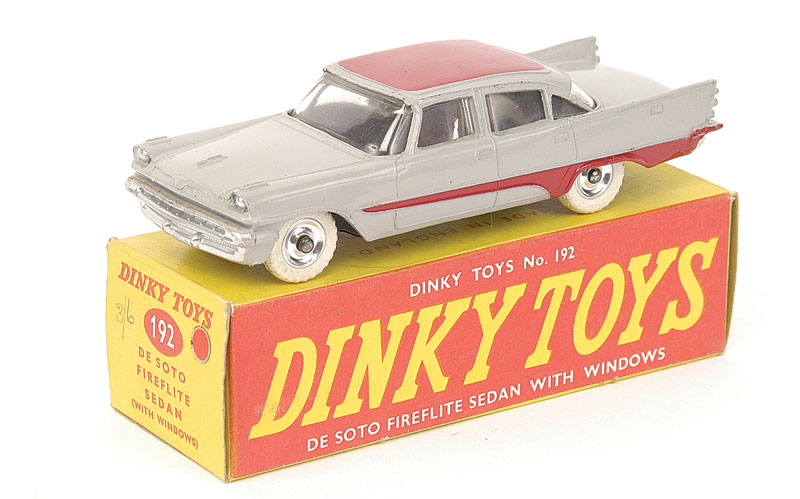 The final style reverted to the original style of box although the side illustrations had been revised, and the yellow background of the box was lighter in colour with De Soto Fireflite on the foreign language end flap being boxed.
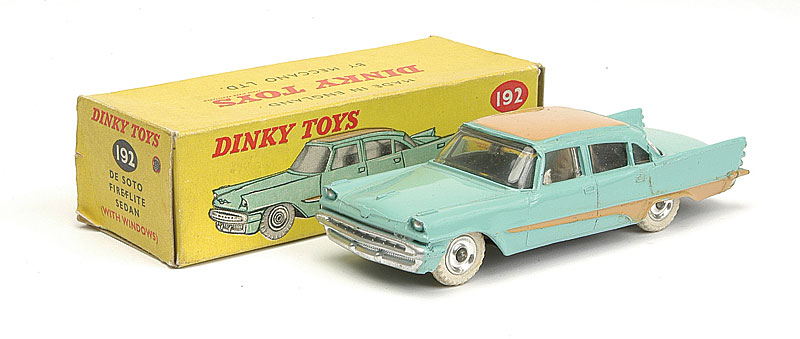
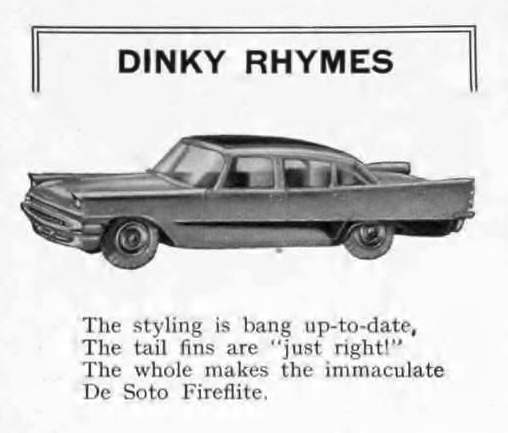
 Almost two years after the 192 De Soto Fireflite was launched, a little poem appeared in the August 1960 issue of the MECCANO MAGAZINE.
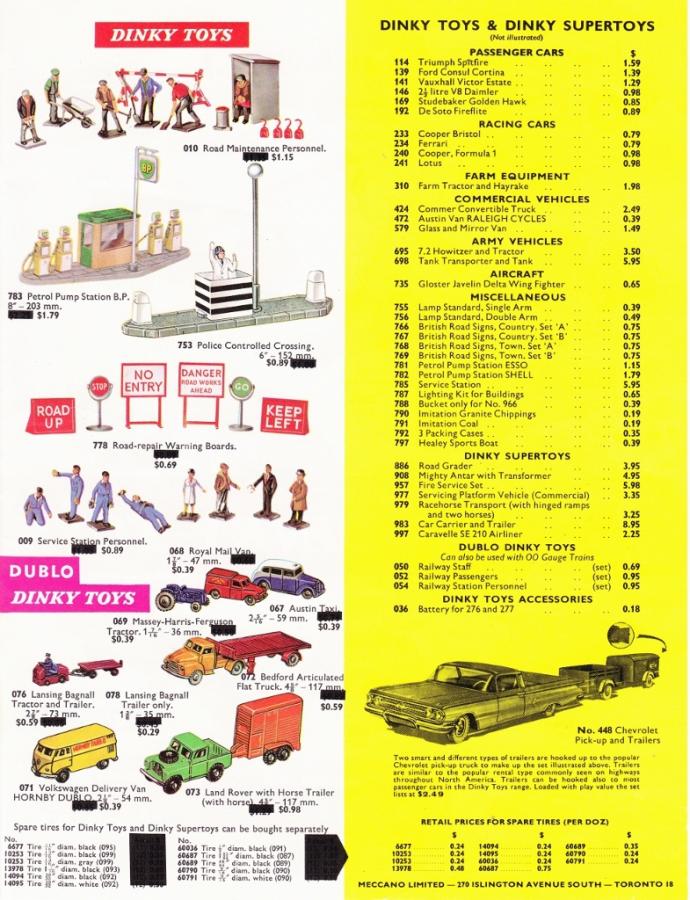
 The 192 De Soto Fireflite remained in production until late 1963, when production ceased. It was listed in the Australian edition of the Meccano Toys of Quality price leaflet printed in March 1963. The price leaflet issued for the UK market also printed in March 1963 does not contain the 192 De Soto Fireflite. The difference can be explained by the distance and shipping time between the UK and Australia. However, the UK catalogue with a print code of 13/763/400 (July 1963) does list the 192 De Soto Fireflite with a price of 3/6. The model is not included in the first 1964 catalogue printed in January 1964 nor in the later Meccano Toys of Quality price leaflet printed in September 1964. The Canadian catalogue for 1963, printed in October includes the model as one of many not illustrated. Finally none of the 1964 catalogues available to me for both the UK and Australia include the 192 De Soto Fireflite, so with that it can be asumed that production ceased before the end of 1963.
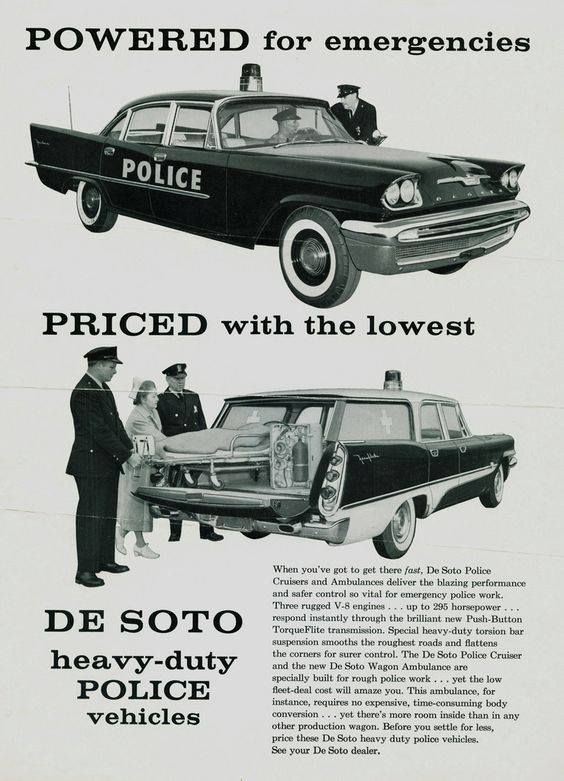
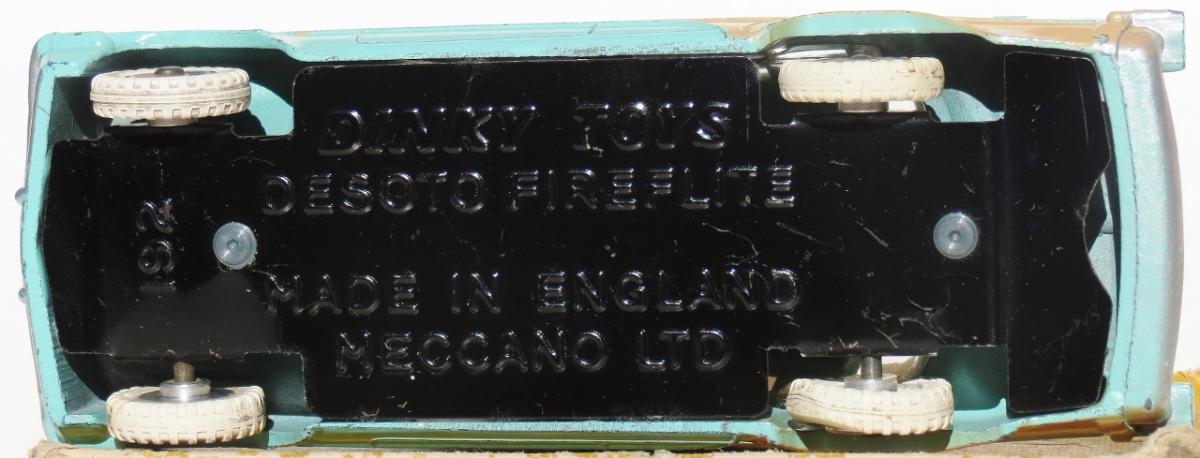
 One thing I find strange is that during the production of the 192, the same casting was used for the 258 U.S.A. Police Car between 1960 and 1961. This model was provided with three items the 192 never received; an interior seating, steering wheel and suspension. In addition, the 258 was given a revised base plate containing no sales number. Does anyone have a 192 without a sales number on the base plate? I have had 12 De Soto pass through my hands, and all had the sales number on the base plate. A similar question could be directed to several other models that had their features increased when the basic casting became another model. But it is interesting that Meccano made the 258 USA Police Car using the body of the De Soto Fireflite, as examples of the real car were manufactured for various police departments throughout the United States.
 I received my 192 De Soto Fireflite inturquoise (Seafoam Green) and stone for Christmas 1959. It soon became and still remains one of my favourite models. In fact, it was selected to accompany my family and me to the United Kingdom and a tour of Europe in 2005. I brought it along to enable a Dinky Toys I had been given to return to the city of its creation on 14 August 2005 and the De Soto was selected. And here she is being held over the Binns Road sign.
 And here she is with its box
 My De Soto is perhaps the most travelled Dinky Toy ever, as it has accompanied its owner on every overseas trip since 2005, as I have become used to including it in my hand luggage. Yes, I know what the reader is thinking . . . . .! To conclude this photo-essay, here are some more images covering the real car, its various versions and promotion material.
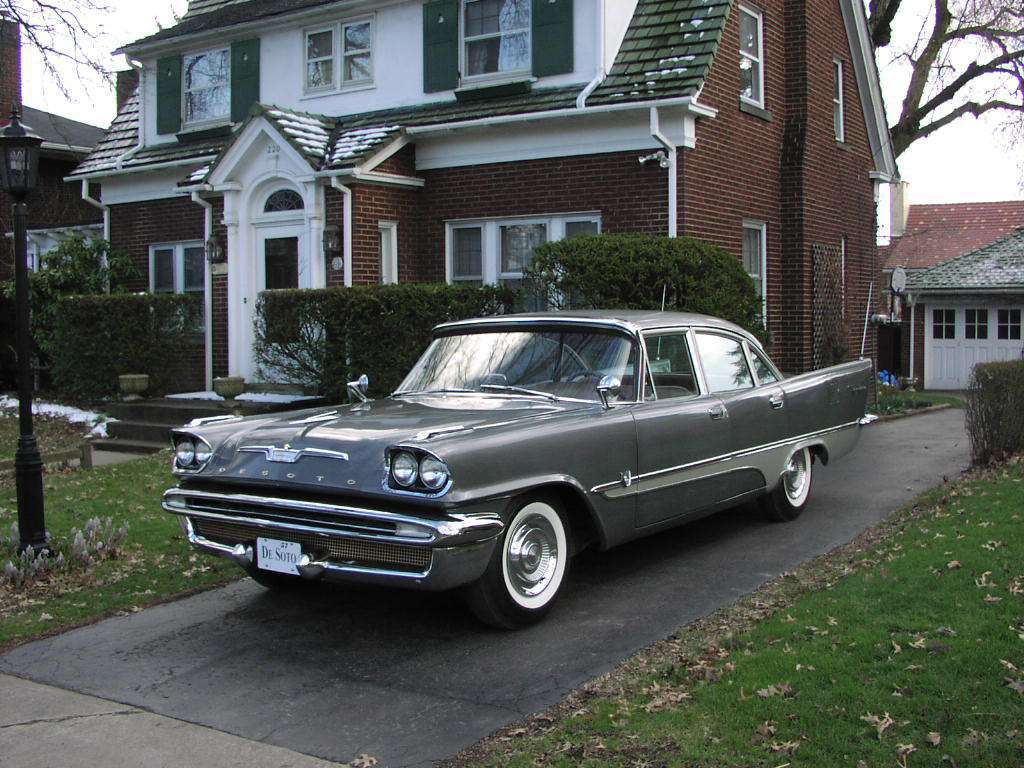 One last look at this most attractive new Dinky Toys No. 192 I present the following images.
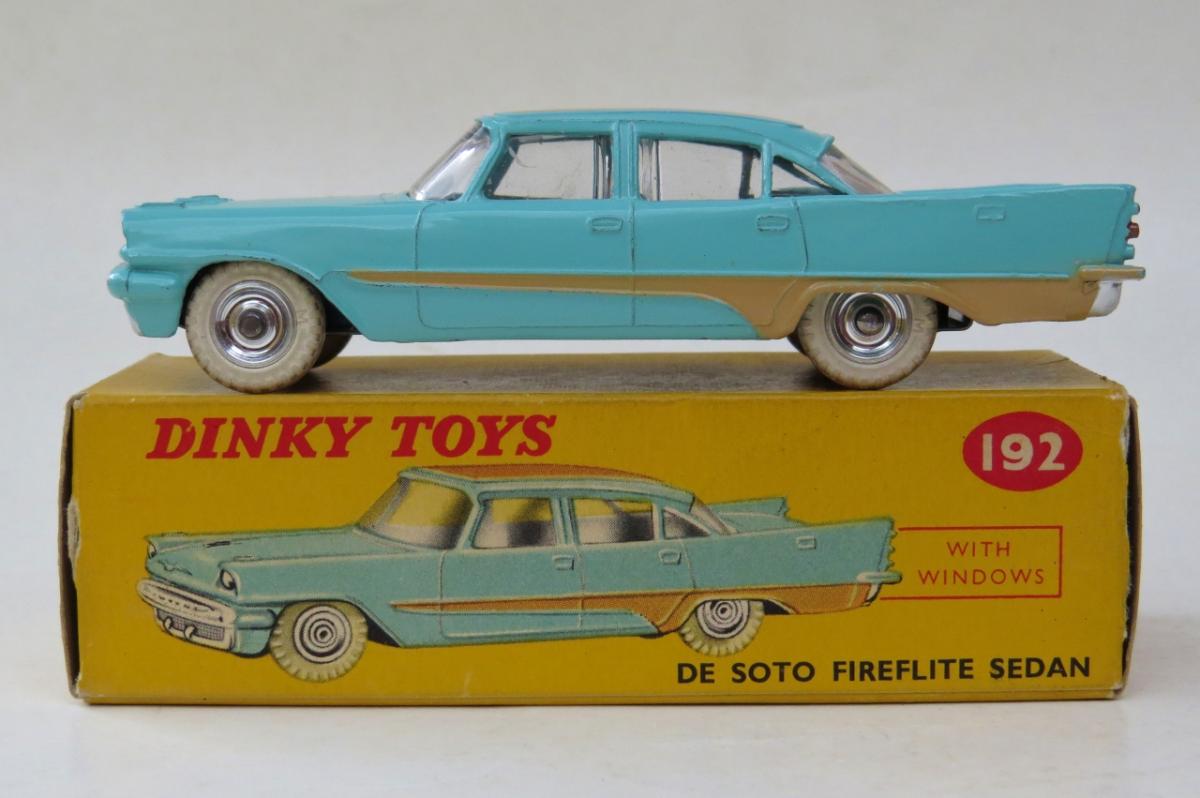
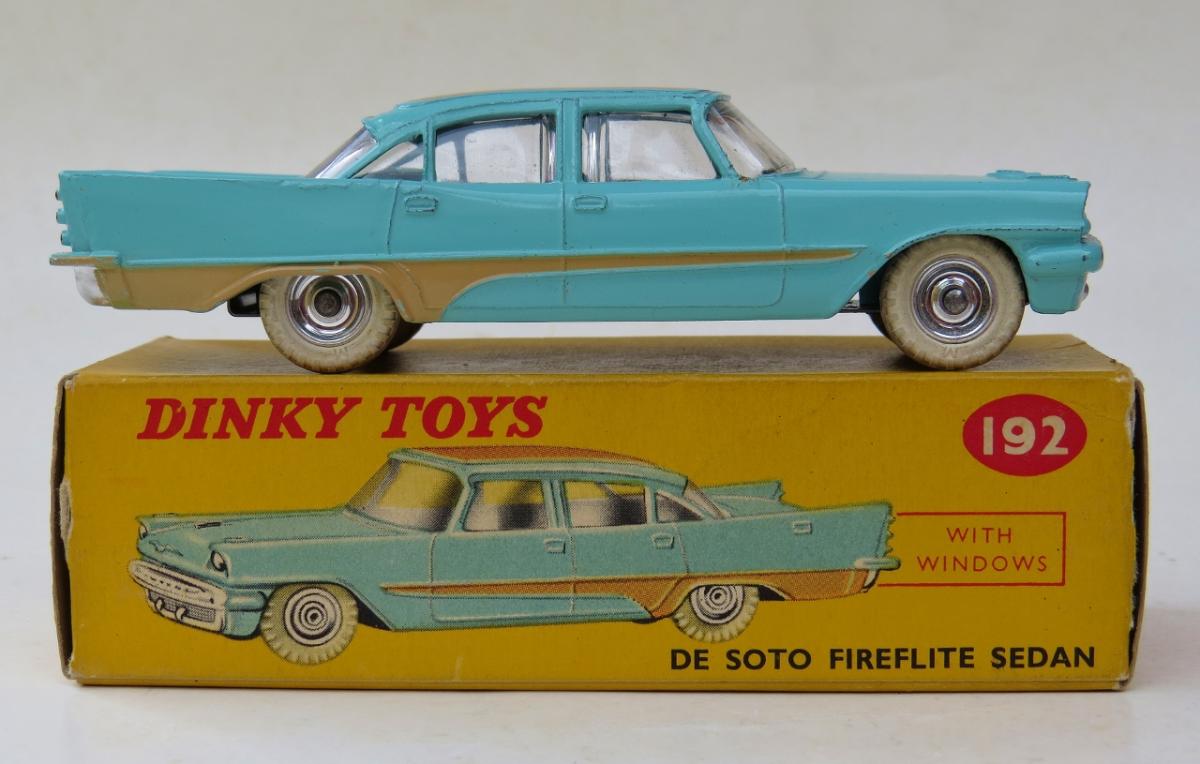 Concluding with its base plate.
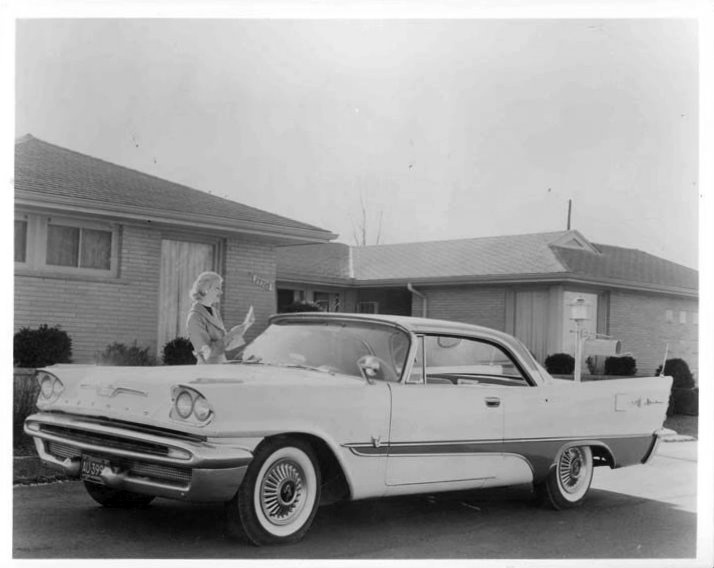
 Unfortunately, unlike my photo-essays on the 173 Nash Rambler and 193 Rambler Cross Country, I have been unable to locate any factory publicity photographs with a bevy of beauties! But, I will keep looking! No, wait! Here are a couple that should liven up this Topic and relieve the boredom!
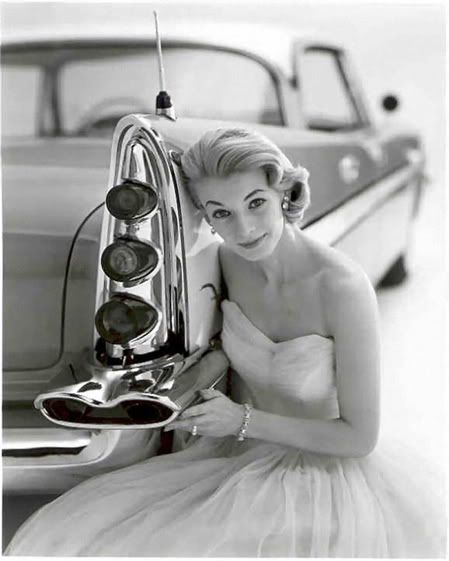 Apologies the above is not a 1957 De Soto but 1958, but who cares??!
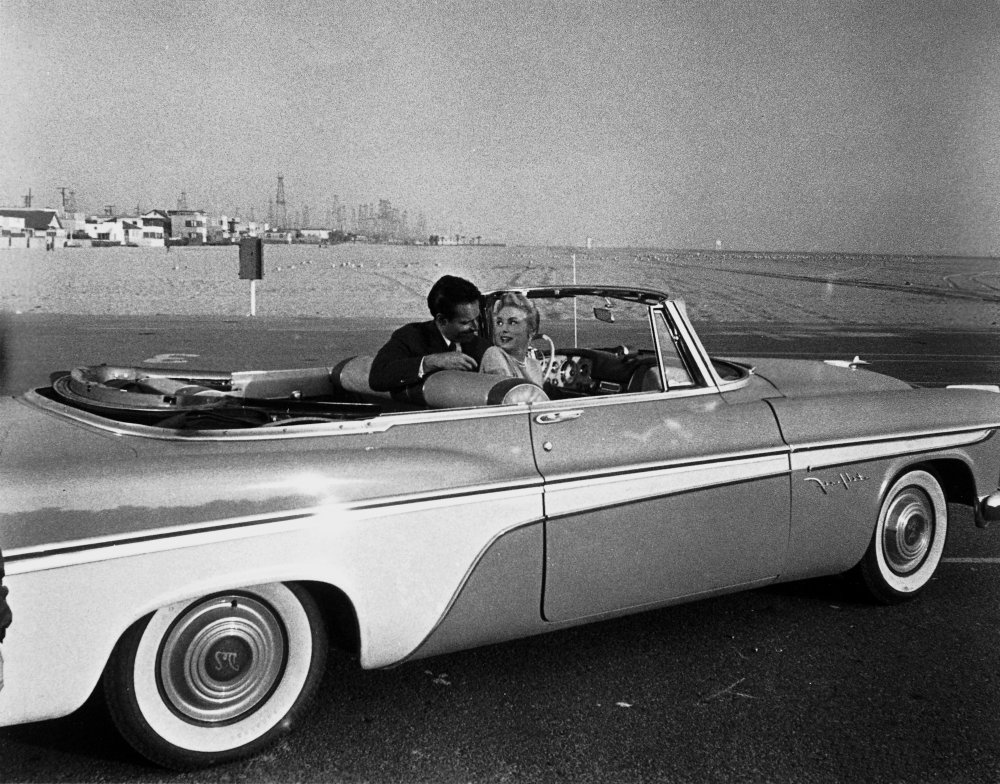
 And the last one with Charlton Heston and Janet Leigh, in a 1956 De Soto Fireflite on the set of Touch of Evil
 And on that note, kind regards to you all Bruce Hoy (150) 20172307/1144/0239
Please Log in or Create an account to join the conversation.
- Jan Oldenhuis
-

- Offline
- User
-

Less
More
- Thank you received: 0
9 years 1 month ago #20004
by Jan Oldenhuis
Replied by Jan Oldenhuis on topic 192 De Soto Fireflite (1959-63)
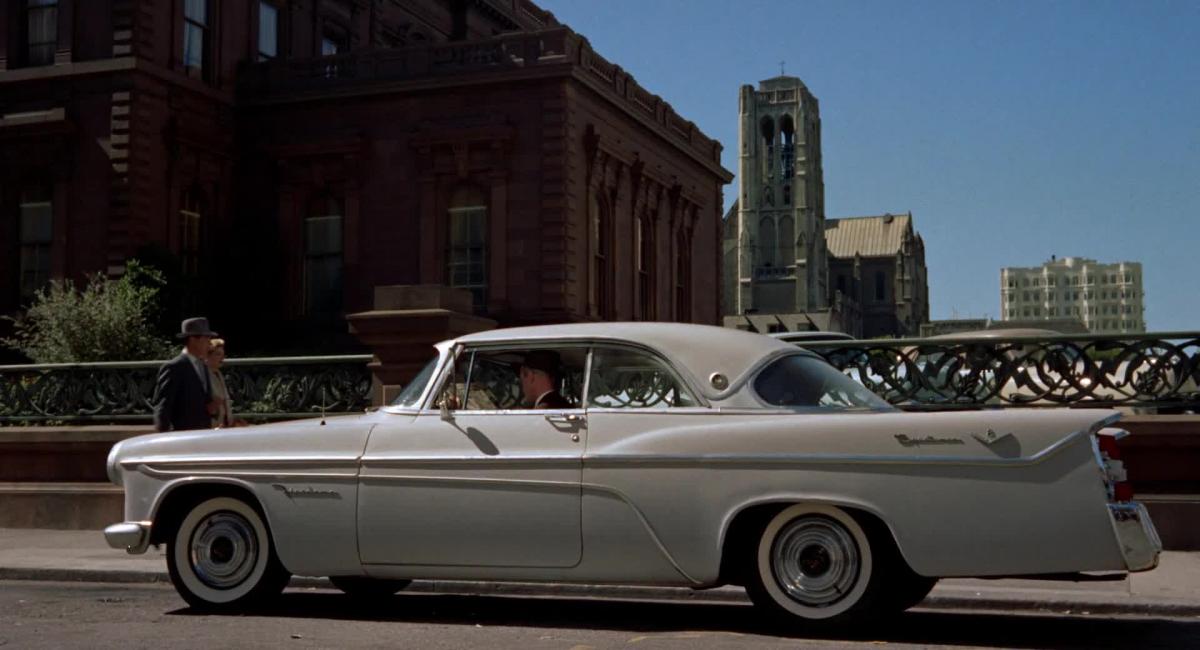
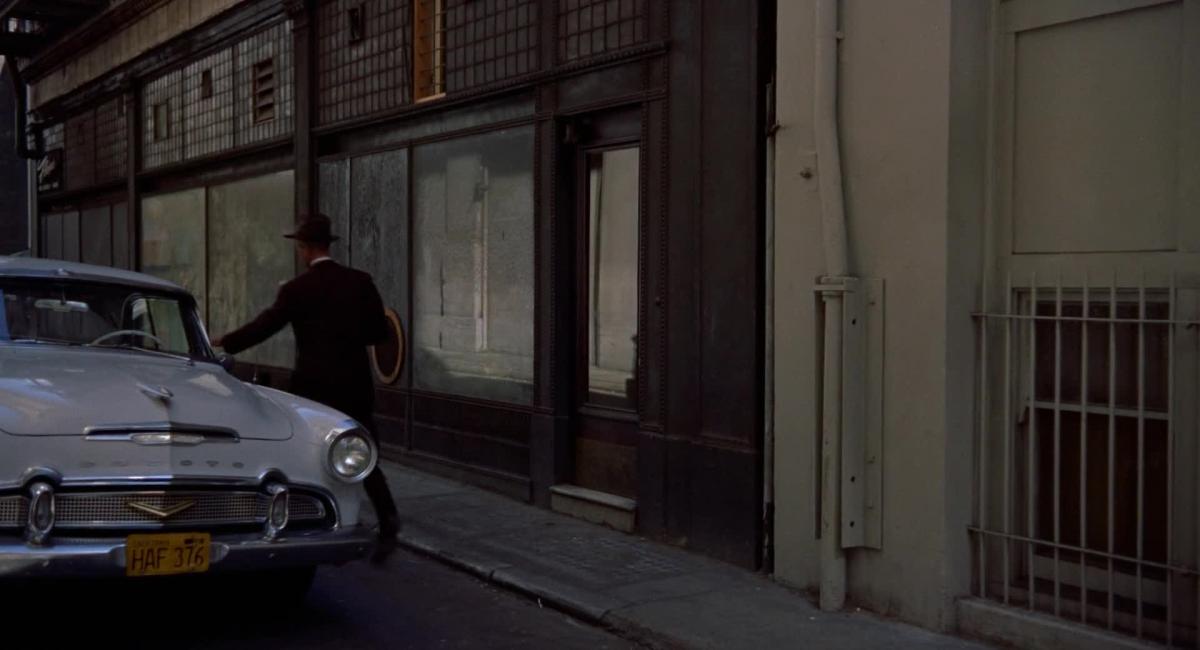
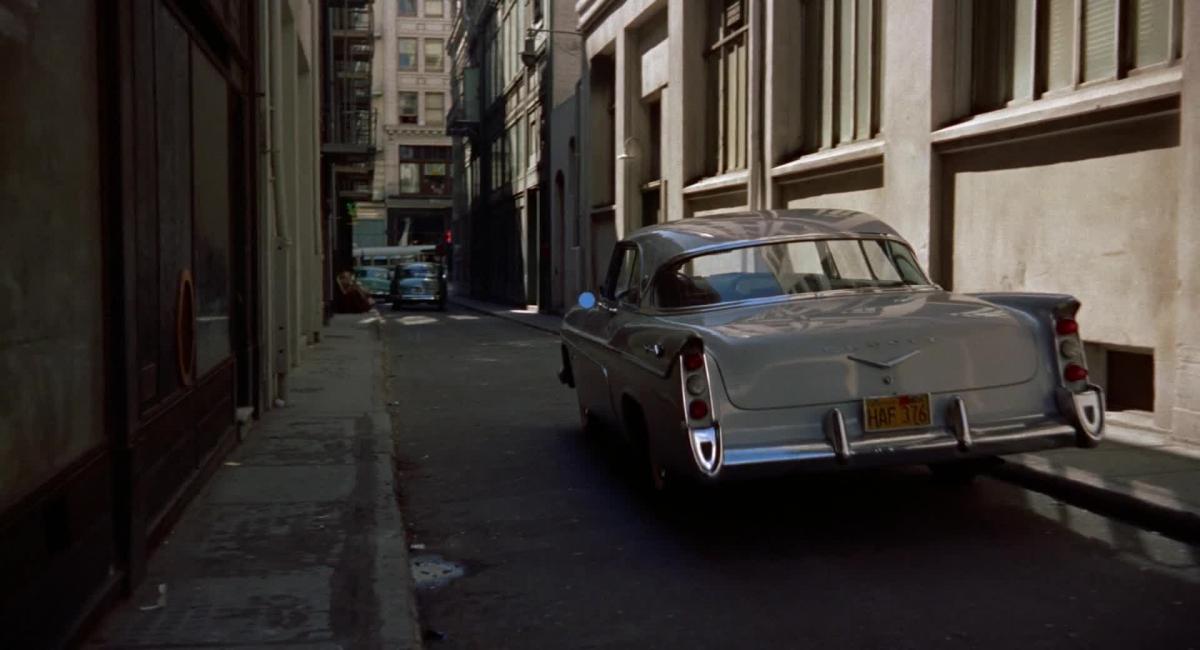
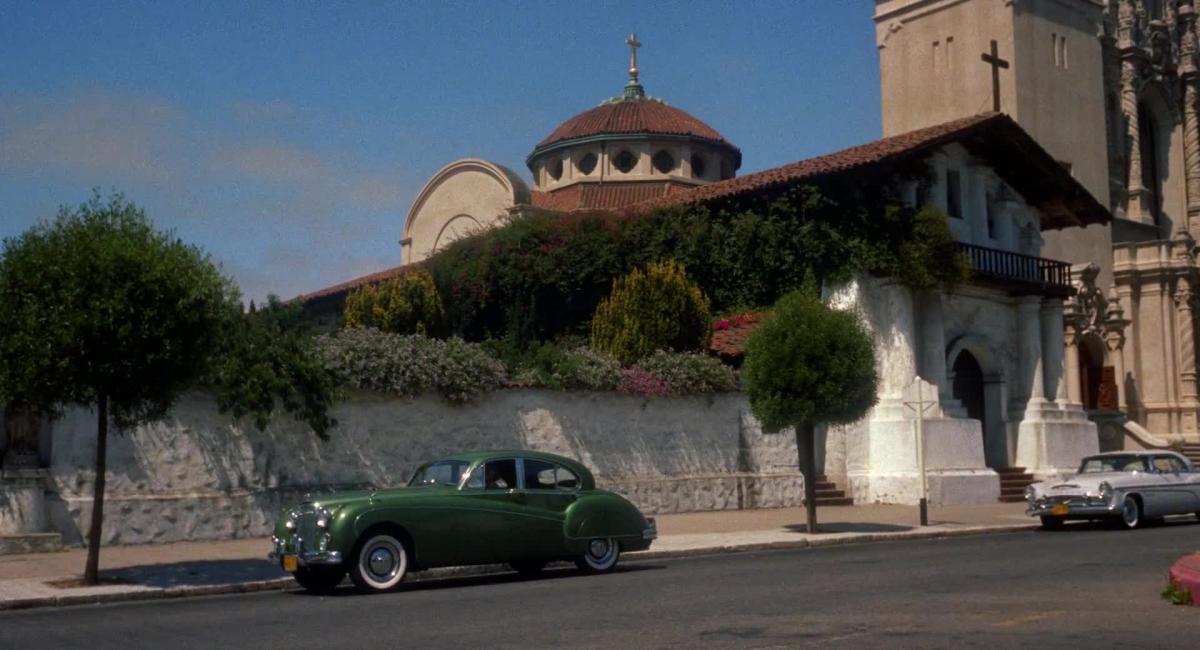
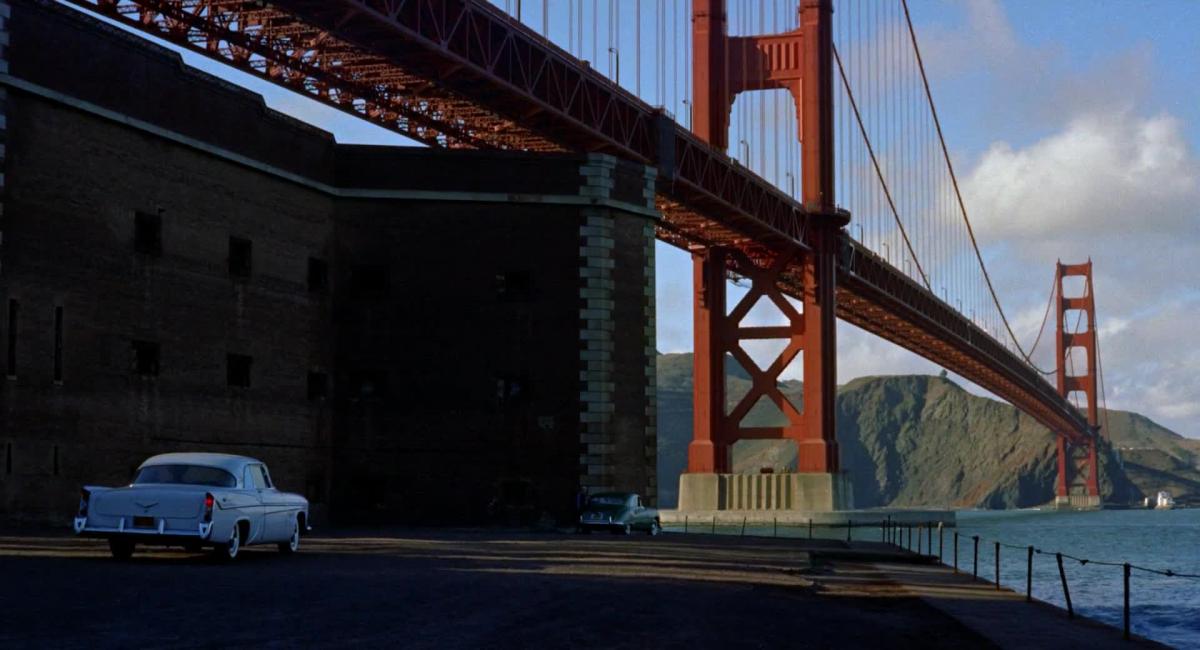
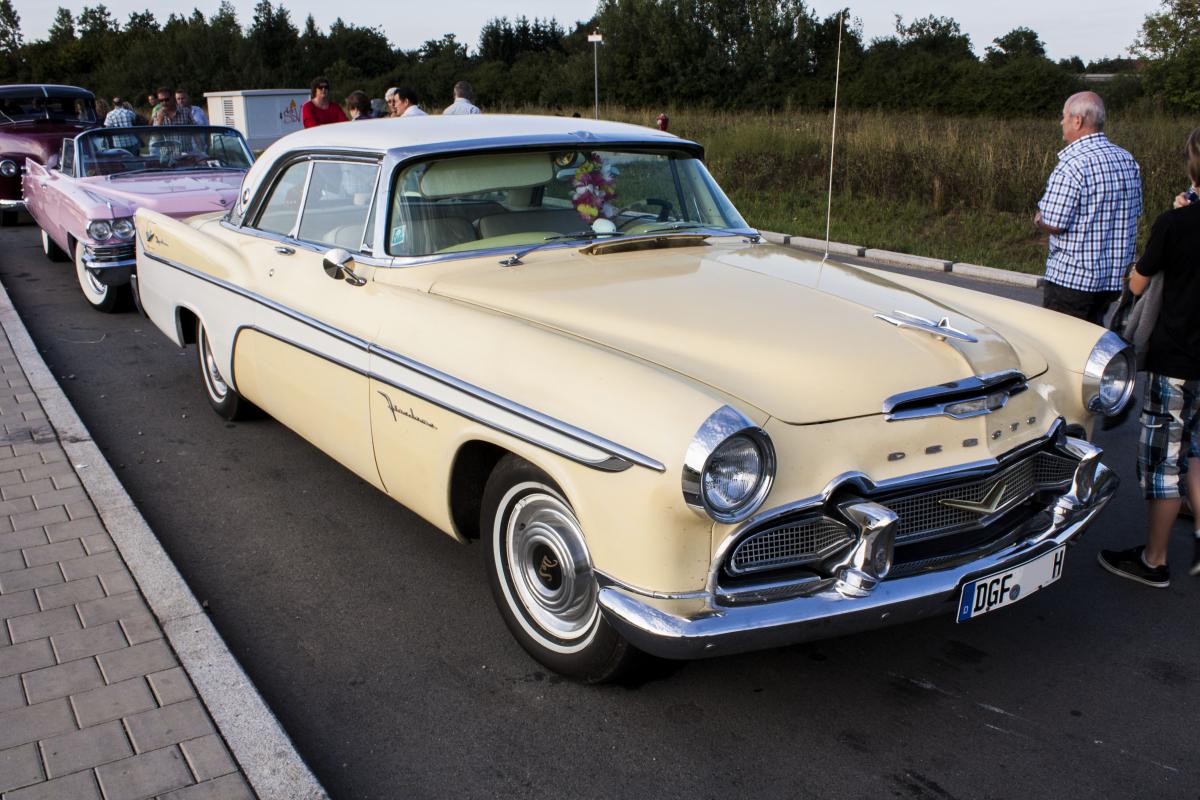
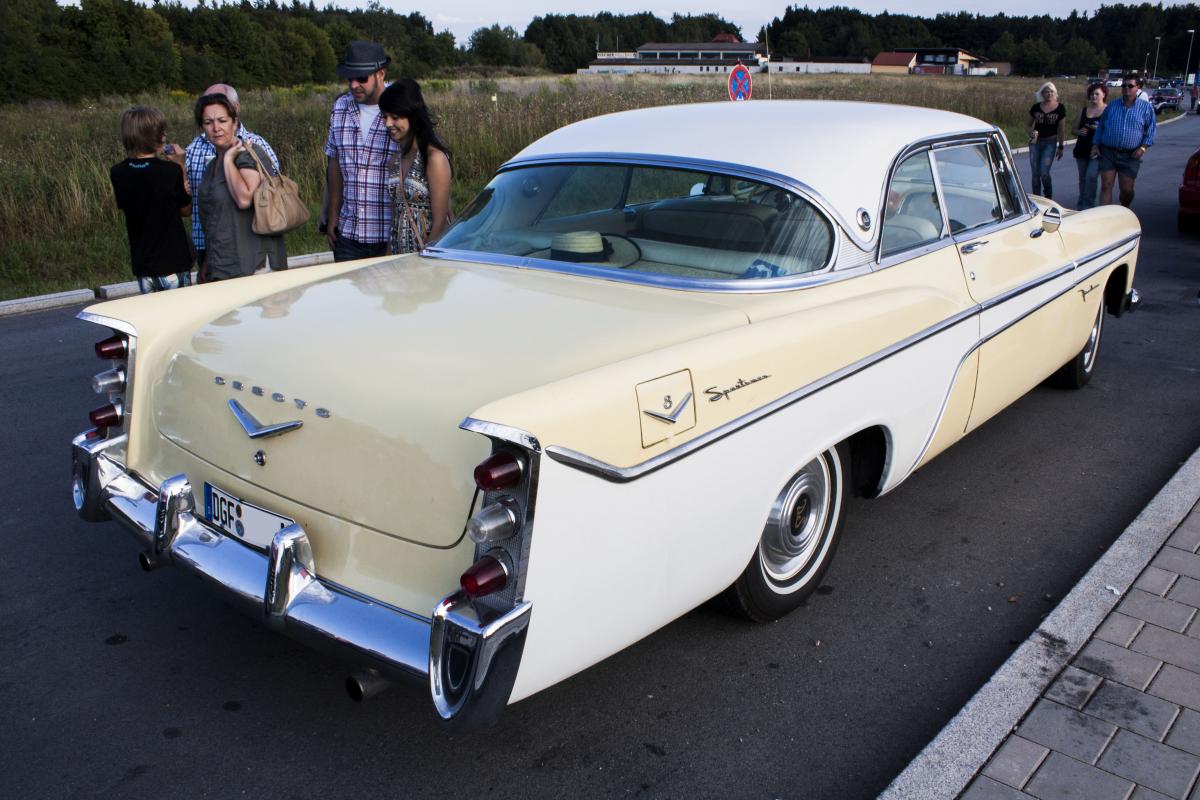
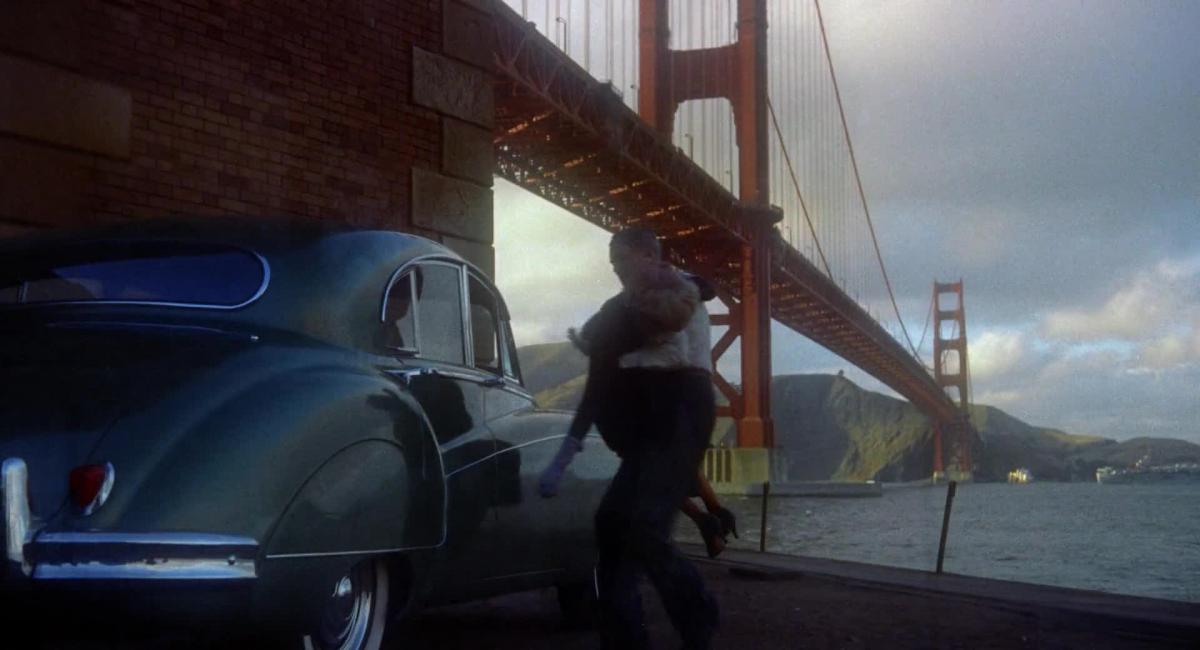
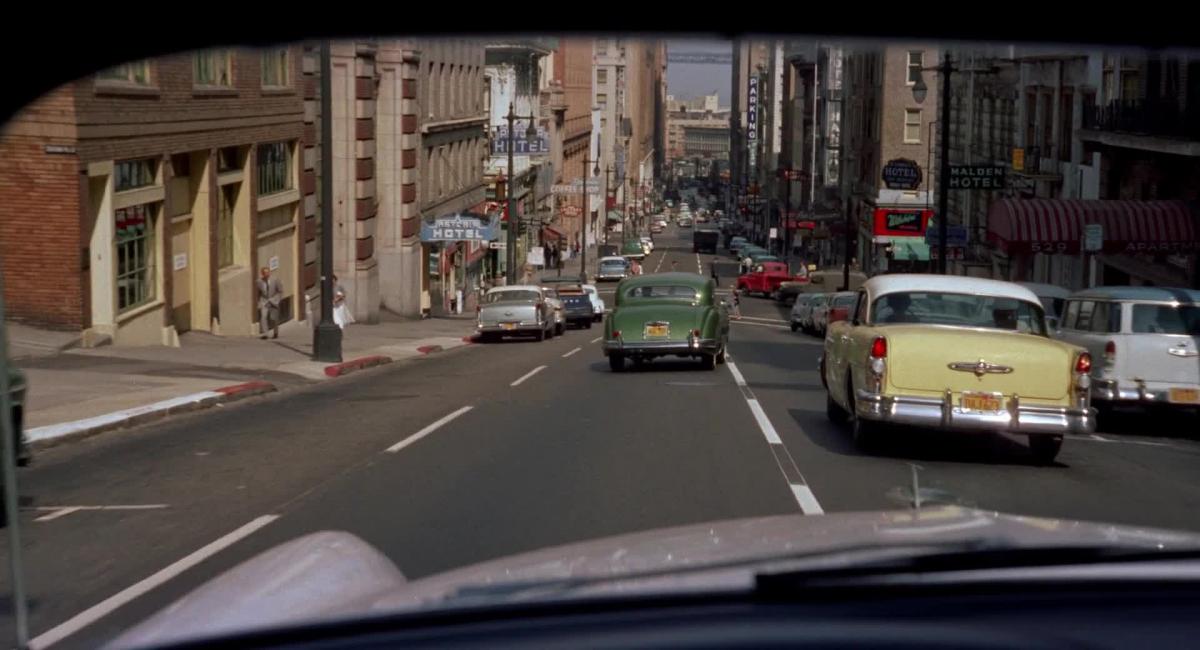
Bruce, an extensive and highly documented view of the background history of this very beautiful model Desoto Fireflite. You have done a lot of work again. Thank you for compiling this for us. Very special that this model inspired you to make a trip to the city of origin and take the model with you to take a picture of the Binns Road sign, the place of origin of the Dinky Toys model. I also have this model in the same colour, so I do not need to show a picture. My interest in DeSoto came in particular by Alfred Hitchcock's movie Vertigo from 1958. An exciting thriller played by James Stewart as detective John 'Scottie' Ferguson and Kim Novak as Judy Barton / Madeleine Elster (double role of the woman who lived twice). In the pursuit of Kim Novak in San Francisco by detective John 'Scottie', many classic cars from the 50's reveal beautiful images. The main actor (James Stewart) drives a beautiful DeSoto Firedome Sportsman 1956 V8 and the opponent Kim Novak a beautiful Jaguar MK8 1957. The movie gets a special turn when Kim Novak jumps into San Francisco Bay to commit 'allegedly' suicide . I'll show some snapshots of these cars in that movie. Kind Regards, Jan Oldenhuis 23-7-2017
Please Log in or Create an account to join the conversation.
- dinkycollect
-

- Offline
- User
-
Less
More
- Thank you received: 0
9 years 1 month ago #20006
by dinkycollect
Replied by dinkycollect on topic 192 De Soto Fireflite (1959-63)
Hello Ron, What a fabulous article.Jacques.
Please Log in or Create an account to join the conversation.

9 years 1 month ago #20007
by janwerner
Replied by janwerner on topic 192 De Soto Fireflite (1959-63)
An account of familiar 'Bruce quality'! Thanks and kind regards, Jan
Please Log in or Create an account to join the conversation.
- dinkycollect
-
- Offline
- User
-
Less
More
- Thank you received: 0
9 years 1 month ago #20008
by dinkycollect
Replied by dinkycollect on topic 192 De Soto Fireflite (1959-63)
May I add to this fantastic article this yellow box which states : WITH WINDOWS AND FOUR WHEEL SUSPENSION.
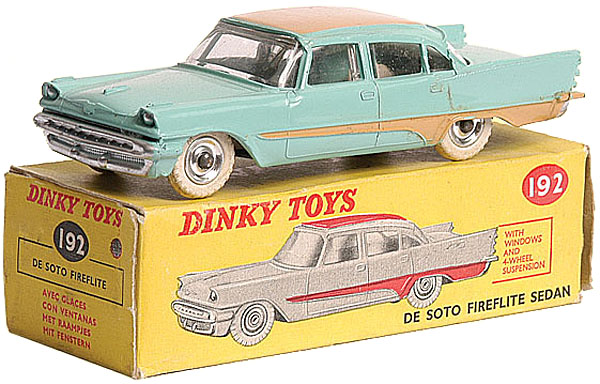 Photo by courtesy of Vectis Auctions.
Please Log in or Create an account to join the conversation.
9 years 1 month ago #20010
by Dinkinius
Replied by Dinkinius on topic 192 De Soto Fireflite (1959-63)
Thank you Jan O., Jan W, and Jacques. for your most encouraging words. I must confess after posting my photo-essay I had misgivings about its length as I had second thoughts about the amount of detail I included such as the Fireflites that came after the 1957 model. In retrospect, I probably would have written it the same, but perhaps with a little more editing! (One should have seen my original essay - about twice as long! I guess if those find it too long and boring, there is such a thing as scrolling!) Yes Jacques, thank you for my name change in your first Post which is understandable as you had just written a Post directed to my Kiwi friend Ron, but I am still Bruce!! But thank you so much for bringing to my attention something that I missed when I looked through the Vectis site. It is interesting that in the case of one De Soto that Vectis sold, the cataloguer actually mentioned the lack of a sales number on the base plate. Which then leads me to think that it is possible the other models packaged in the last type of box that have been sold through Vectis that these too may not have had a sales number on their base plates. What does surprise me is that the folk employed at Vectis are supposed to be top-notch, so the fact that a model has suspension inscribed on its box when it originally did not should have rung some alarm bells and for the description to have included any information that sets this model apart from the others. This is yet another example whereby Vectis cataloguers seem more intent on writing a description mentioning things like, 'still a nice example', or 'would benefit from some cleaning', when something quite obvious is not mentioned. Also, the image Jacques posted above is interesting as there appears to be a rather obvious change in the shape of the windscreen in the roof-line area as it does not look like the usual casting. On checking the Vectis website, the following model had this as its description: Dinky - No.192 De Soto Fireflite - turquoise, light tan roof panel and side stripe, un-numbered baseplate, spun hubs with white tyres - Excellent to Excellent Plus in Fair box with correct colour spot (lacks one end flap) And here is the image of that model - packaged in a normal 1st issue box. For the ardent enthusiast this would mean that the model and box were never 'together' when 'given birth' at Binns Road. But I wonder if this model also had suspension as well, that was over-looked by the cataloguer? Fortunately the photograph has been very well taken, as one can see the rear tyre on the near side so the model did not have any interior seats and steering wheel! It can only be hoped the new owner as from 9 December 2005 who reads these words and still has the model, will prompt him/her to make contact with the DTCA through this website.
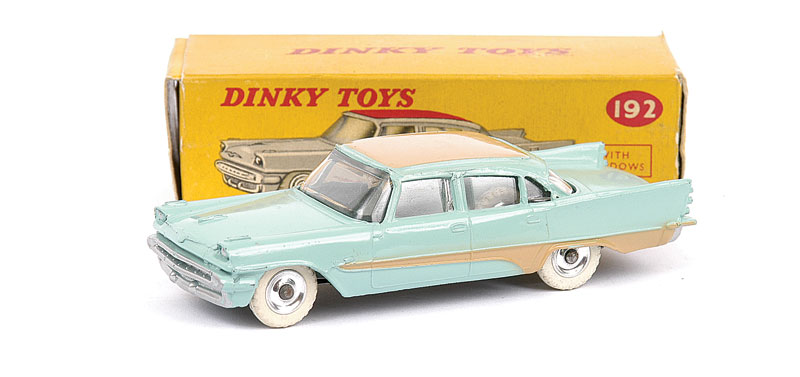 800 377 Image courtesy of Vectis Auctions.But thank you very much Jacques for bringing this to our attention. It just goes to show, when researching a subject, checking images is not sufficient! But at least we now know that there is at least one example 'out there' of a Dinky Toys 192 de Soto Fireflite having a base plate without a sales number. Thanks again, Jan, Jan and Jacques. Kind regards Bruce (150) 20172507/1146/2038
Please Log in or Create an account to join the conversation.
- Jan Oldenhuis
-
- Offline
- User
-
Less
More
- Thank you received: 0
9 years 1 month ago #20011
by Jan Oldenhuis
Replied by Jan Oldenhuis on topic 192 De Soto Fireflite (1959-63)
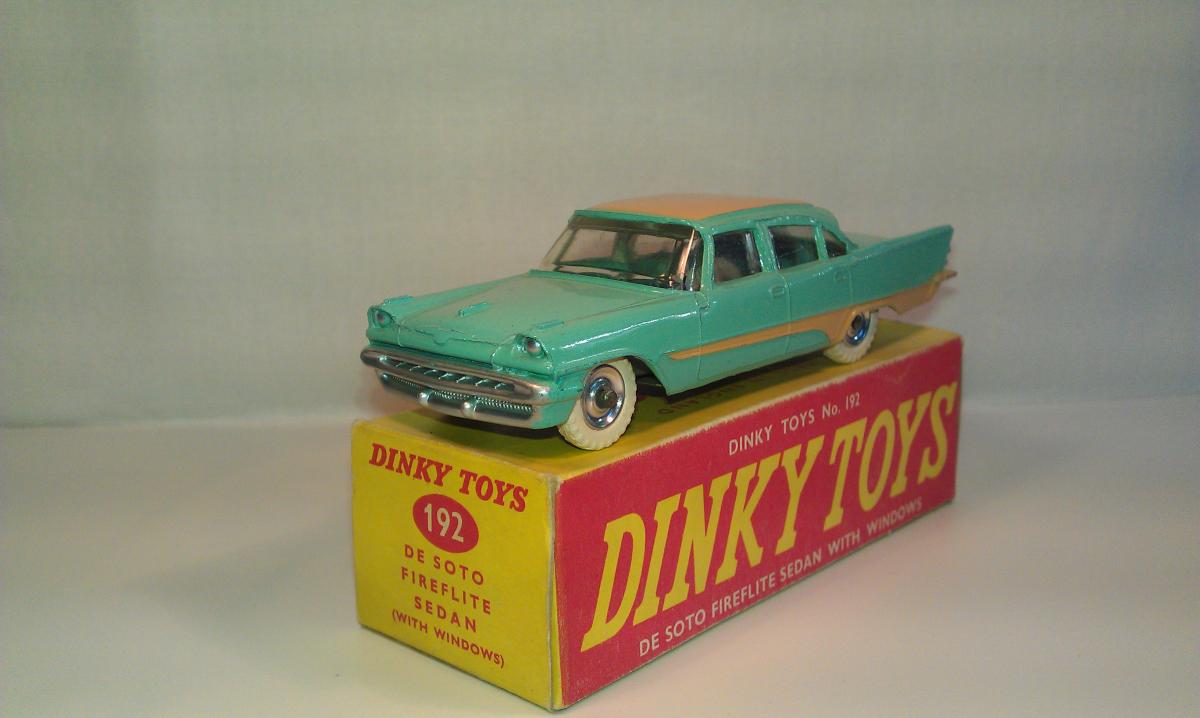
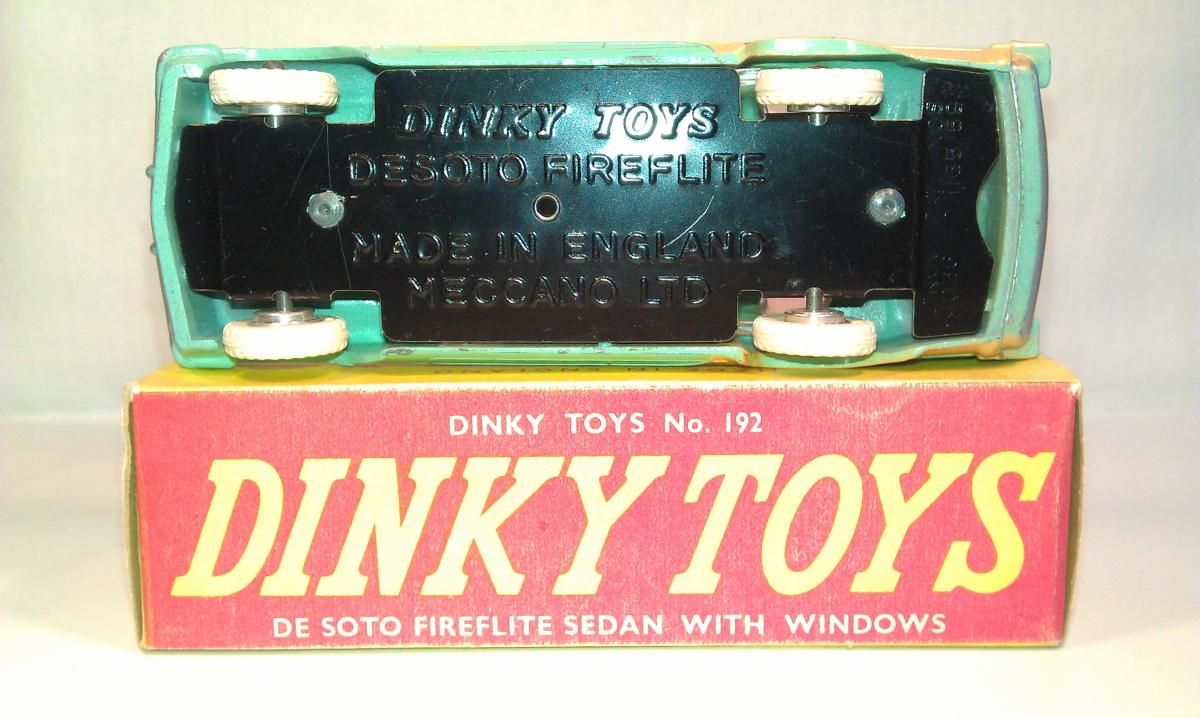
Bruce, you talk at last, to what I understand, about missing of a model number in the base plate. I show pictures of my model 192 with a plain box. My model, as you can see, has no model number in the base plate. Very remarkable is that my box stated on the side line: 'De Soto Fireflite sedan with windows', while my model also has 4wheel suspension as stated on the last picture box of Jaques in comment #5. That is not mentioned on my box while it has so. Kind regards, Jan Oldenhuis, 25-7-2017
Please Log in or Create an account to join the conversation.
9 years 1 month ago #20015
by Dinkinius
Replied by Dinkinius on topic 192 De Soto Fireflite (1959-63)
Jan O. - Thank you for showing your splendid 192 De Soto Fireflite and its red and yellow sided plain box, with suspension. What an excellent example which shows the care given to it by its owner over the years! As the red and yellow sided boxes were issued in 1960 and concluding in 1961, this matches the time frame when the 258 U.S. Police Car were issued with the body of the 192 De Soto Fireflite. As this box style for the De Soto was replaced with a revised illustrated yellow box, and with yours having suspension and in a red and yellow sided plain box, it can then be reasonably assumed that most models from late 1960 will have no number on the base plate as well as the possibility that the models also carried suspension. What a pity that Vectis, with it being a large and succesful seller of toys, has sold 22 models packaged in the yellow and red sided boxes since 2000, and of these, no mention was made with the difference with the base plate except for ONE. Can this really be true? I doubt it when one considers the following auction:
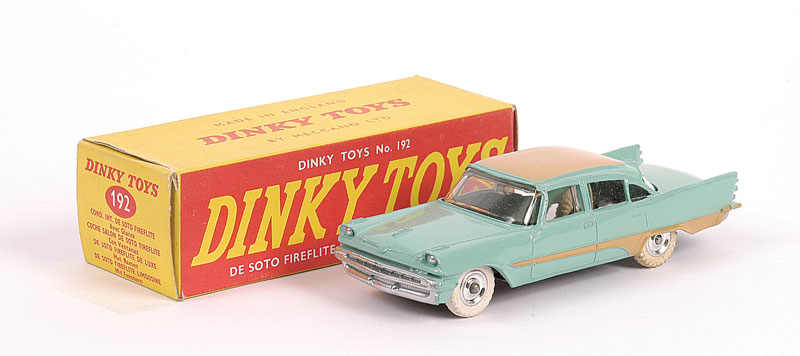
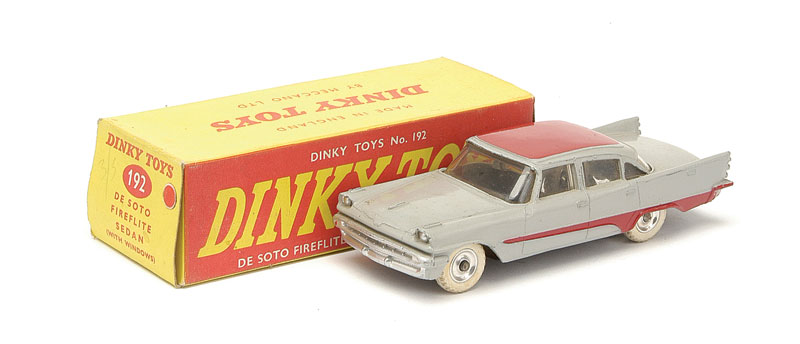 With the following its description: Dinky No.192 De Soto Fire Flite Sedan - pale green body, dark red roof and side flash, spun hubs, white tyres - Excellent Plus in Excellent plain yellow and red export style box. Firstly the model is a 'Fireflite', not in two words, secondly the model has all the appearance of being pale grey, and lastly, the red and yellow box was not specifically for export. This was Lot 2118 which mentioned the base plate:
 Dinky No.192 De Soto Fireflite - light green, tan roof and side stripes, gloss un-numbered baseplate, spun hubs with white tyres - Near Mint in Good Plus plain yellow and red box (one end flap has graffiti and surface tear). But did it also have suspension? Also, of the 22 listed, Vectis has described 10 of these as having 'chrome spun hubs' or simply 'chrome hubs', terminologies that are inaccurate. However, the over-riding factor is that most auction houses that bother to include a 'detailed' description, invariably limits the description to what can be seen, not those defects or unusual inclusions that cannot be seen by the image that is included. But going back to your model Jan, what a lovely model, and I can feel the pangs of jealousy swelling! I really should add this example with suspension to my current collection, not to mention the grey and deep red roof and side flashes! I actually have an example of the latter (but without any suspension!) that had been hiding at the bottom of a carton! So to relieve the monotony of all these turquoise coloured Dinky Toys Fireflites here is my grey and deep red version that curiosly has a slightly modfied masking for the left side flash!!
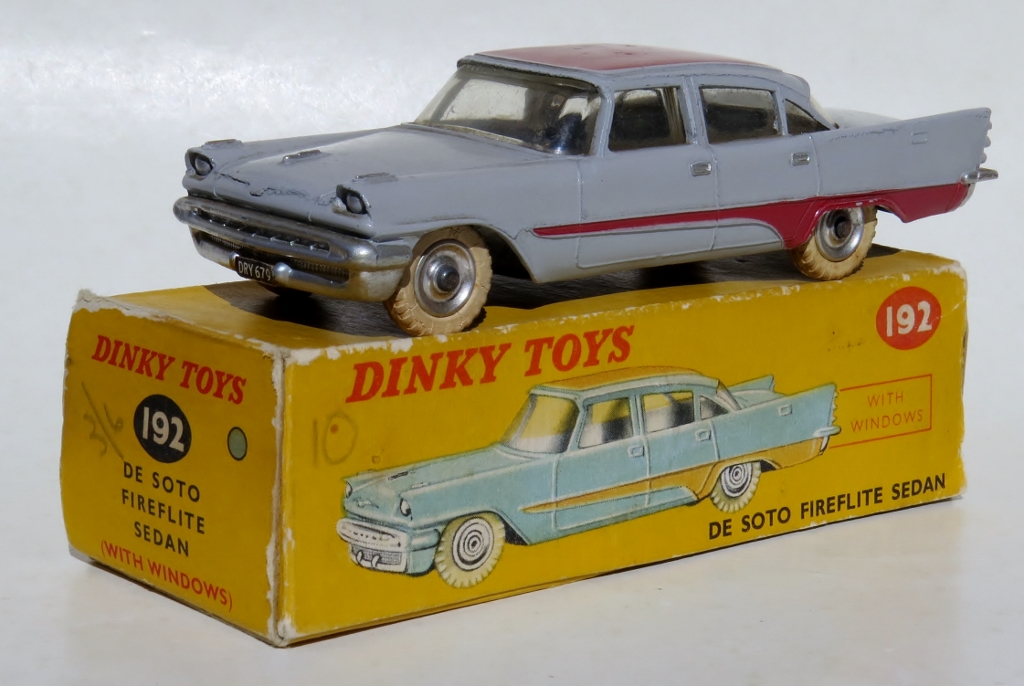 Yes, I know of the presence of what has the appearance of a turquoise colour spot on this box, but it is in fact grey! Not sure why my camera has converted the grey spot to look like a turquoise one! Kind regards Bruce (150) 20172707/1147/1941
Please Log in or Create an account to join the conversation.

9 years 1 month ago #20017
by Richard
Replied by Richard on topic 192 De Soto Fireflite (1959-63)
Pouffffff ! what an article !
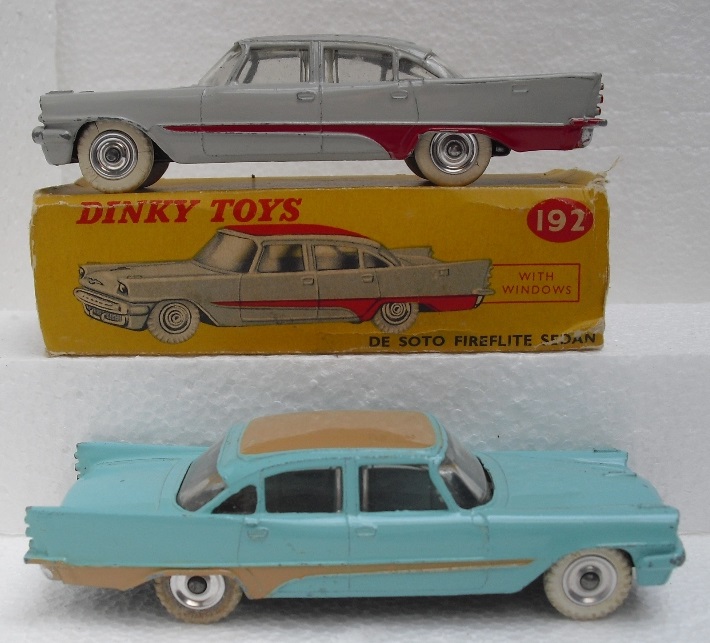
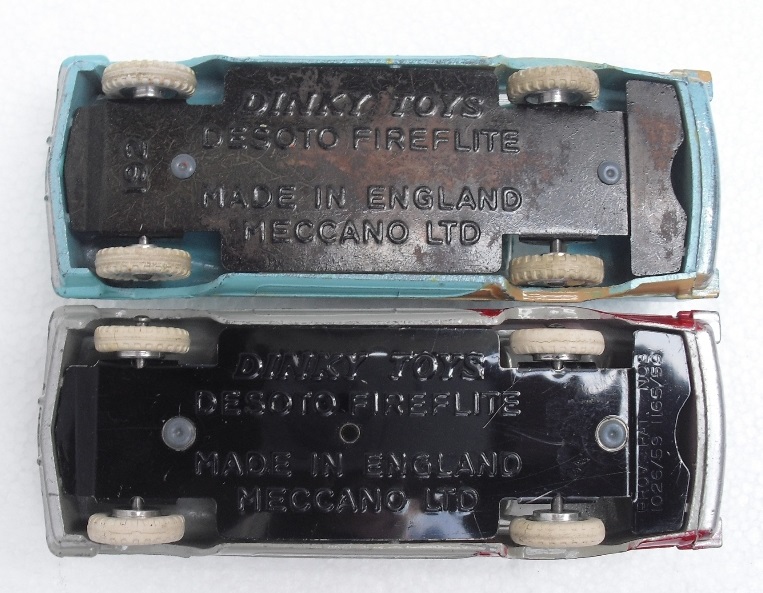
 Congratulations Bruce ! My poor contribution is here under. Please note that only the red and grey model has suspensions and it came with a box without the mention. The baseplates with and without reference number and rear inscriptions. Best regards. Richard
Please Log in or Create an account to join the conversation.
9 years 1 month ago #20018
by Richard
Replied by Richard on topic 192 De Soto Fireflite (1959-63)
Having a look on my last post to verify what I wrote, I suddenly noticed that : There is a hole in the middle of the baseplate of the red & grey model. The internal sides of the hubs are quiet different on both models ! large and thin on the red & grey model and smaller and thick on the green & sand model. We will never finish with the variants .....! Richard
Please Log in or Create an account to join the conversation.
- dinkycollect
-
- Offline
- User
-
Less
More
- Thank you received: 0
9 years 1 month ago #20019
by dinkycollect
Replied by dinkycollect on topic 192 De Soto Fireflite (1959-63)
Dear Richard, The suspension was fitted to the Fireflite with any colour. There is a turquoise one with suspension on eBay at the moment. See192099395675 All the best. Jacques.
Please Log in or Create an account to join the conversation.
9 years 1 month ago #20021
by Richard
Replied by Richard on topic 192 De Soto Fireflite (1959-63)
Dear Jacques. I was just talking about my models. What do you think about the inscription on the box ? Only 'with windows ' is printed. See you soon. Richard
Please Log in or Create an account to join the conversation.
Time to create page: 0.847 seconds
