


- Posts: 1
- Thank you received: 0
40 and 590 Panneaux de signalisation 'Ville' [Traffic Signs 'Town' Set] (1953-1968)
8 years 10 months ago #7760
by janwerner
40 and 590 Panneaux de signalisation Ville Traffic Signs Town Set (1953-1968) was created by janwerner
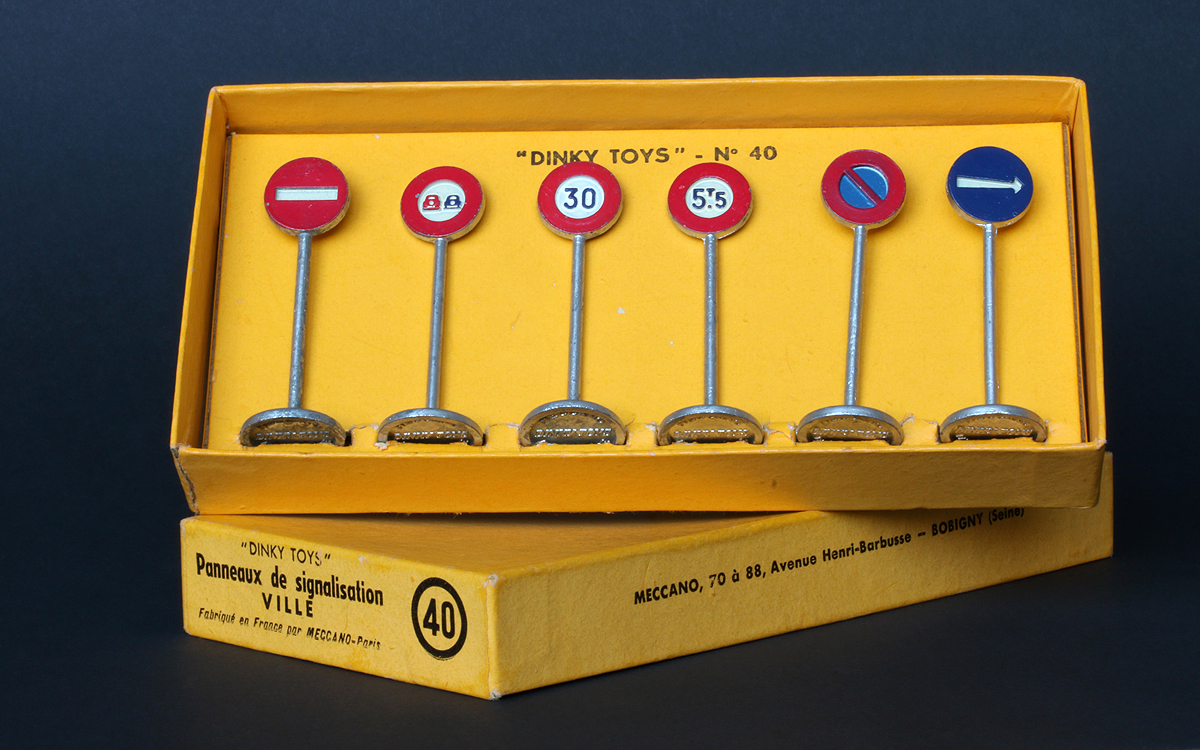
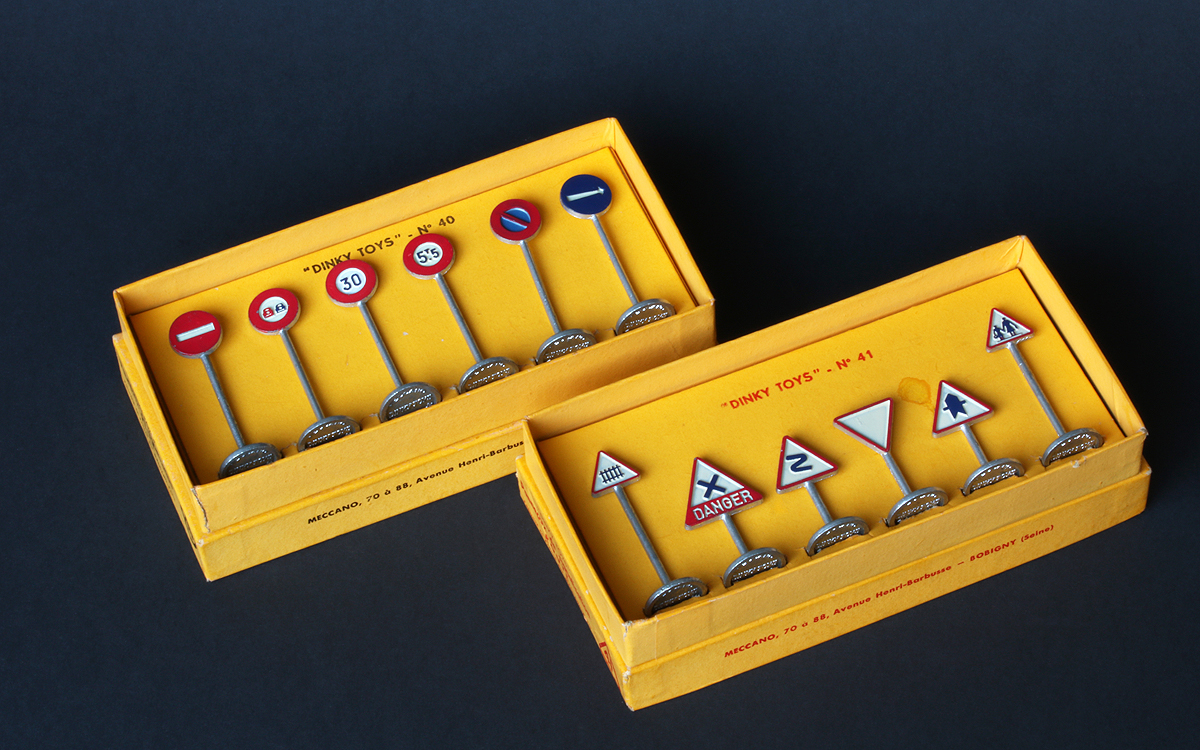
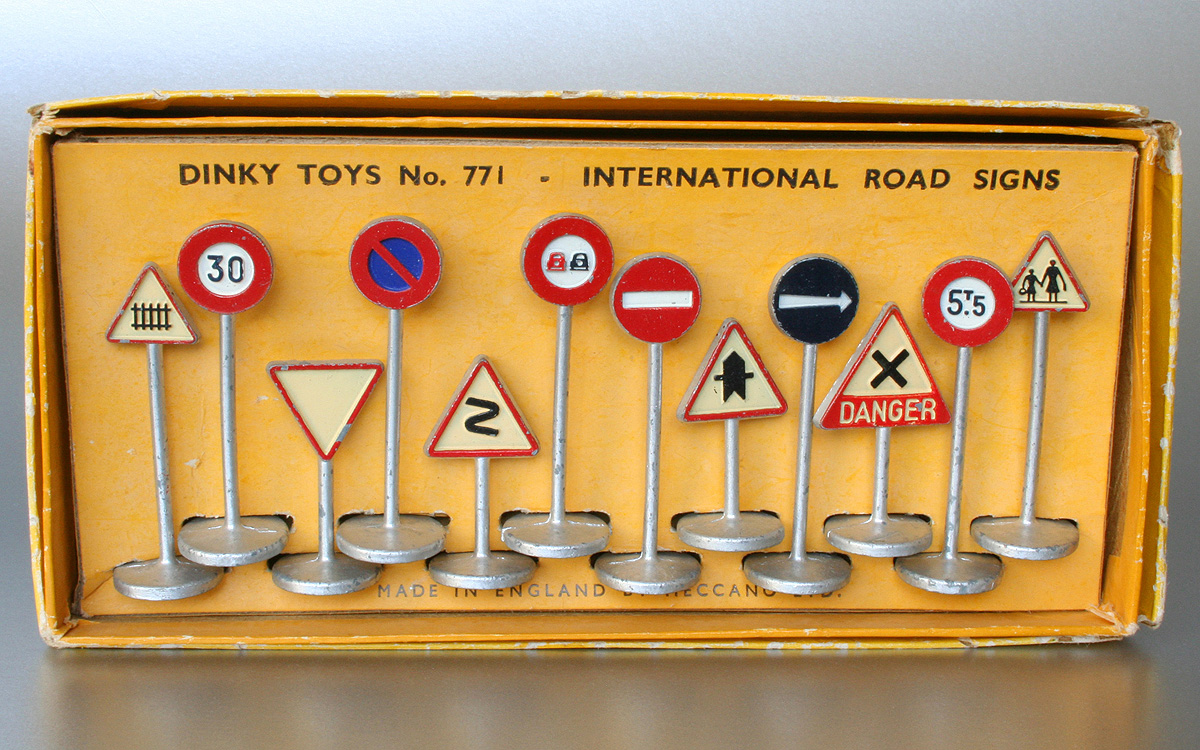
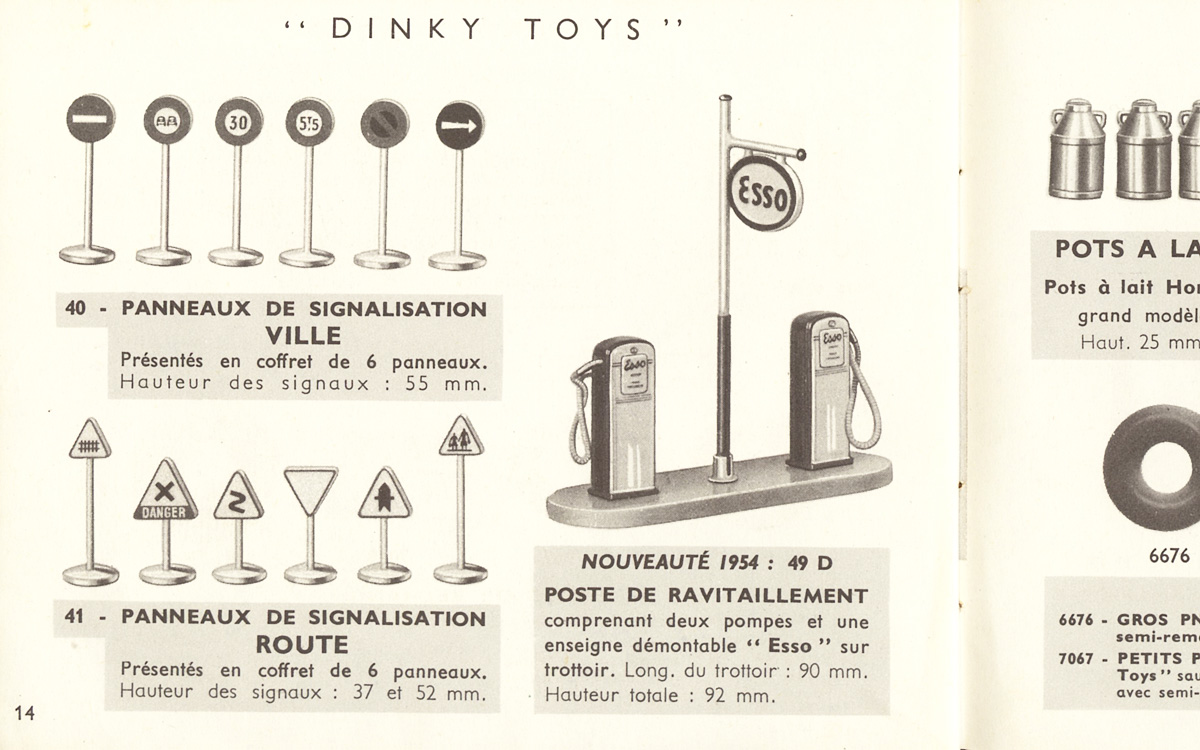
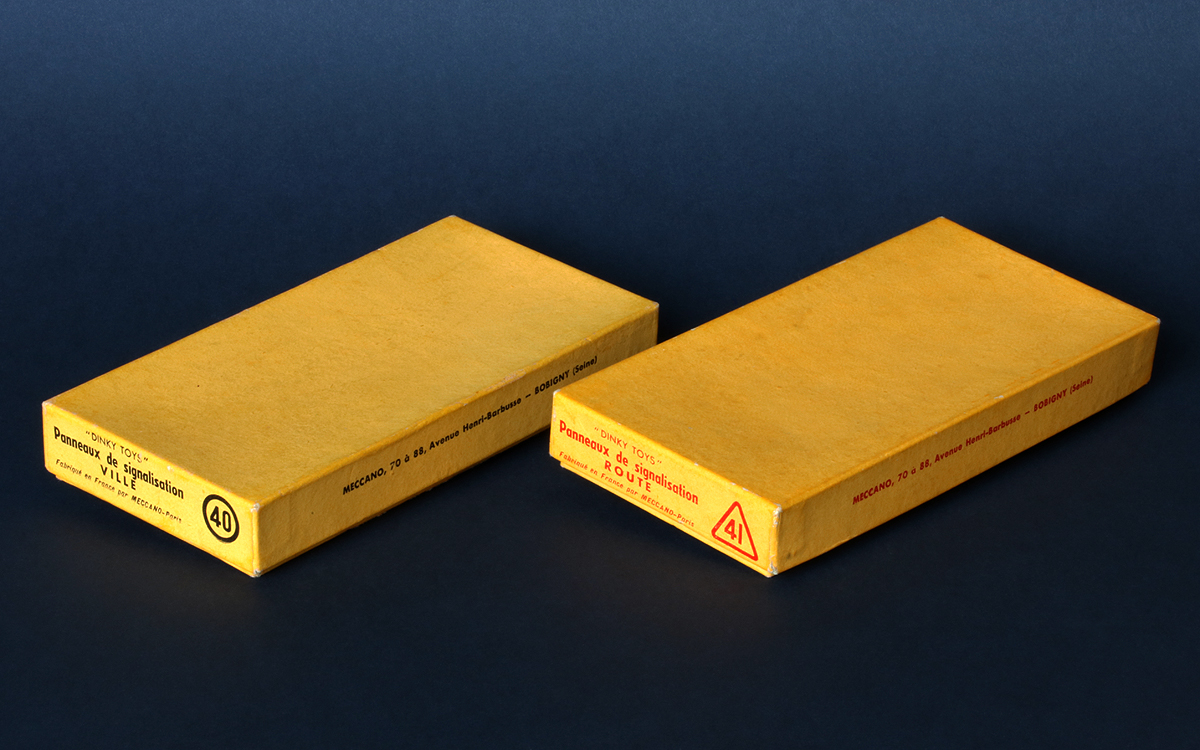
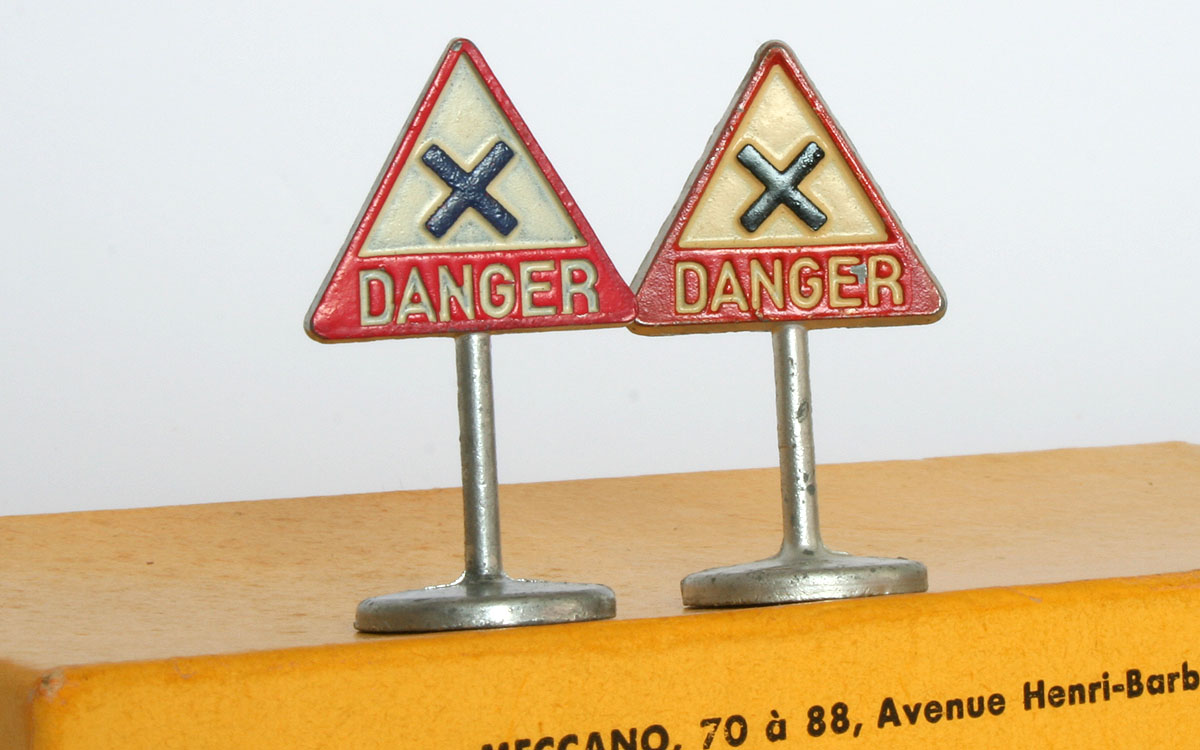
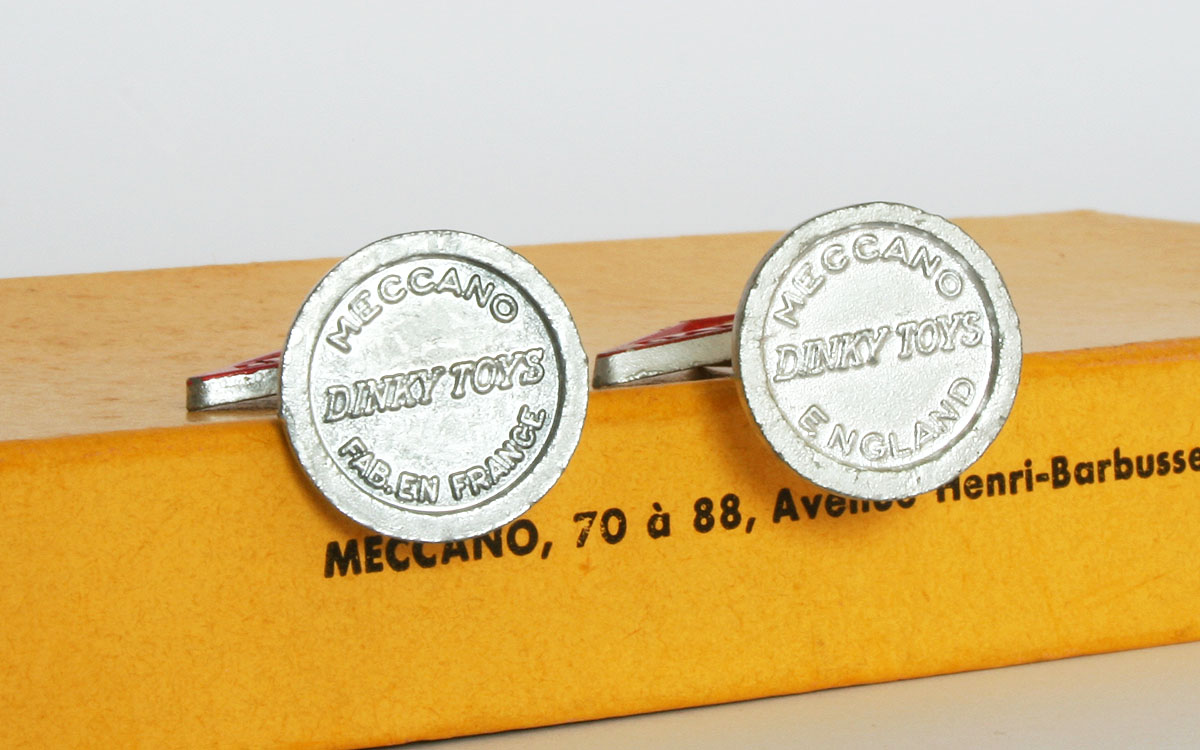
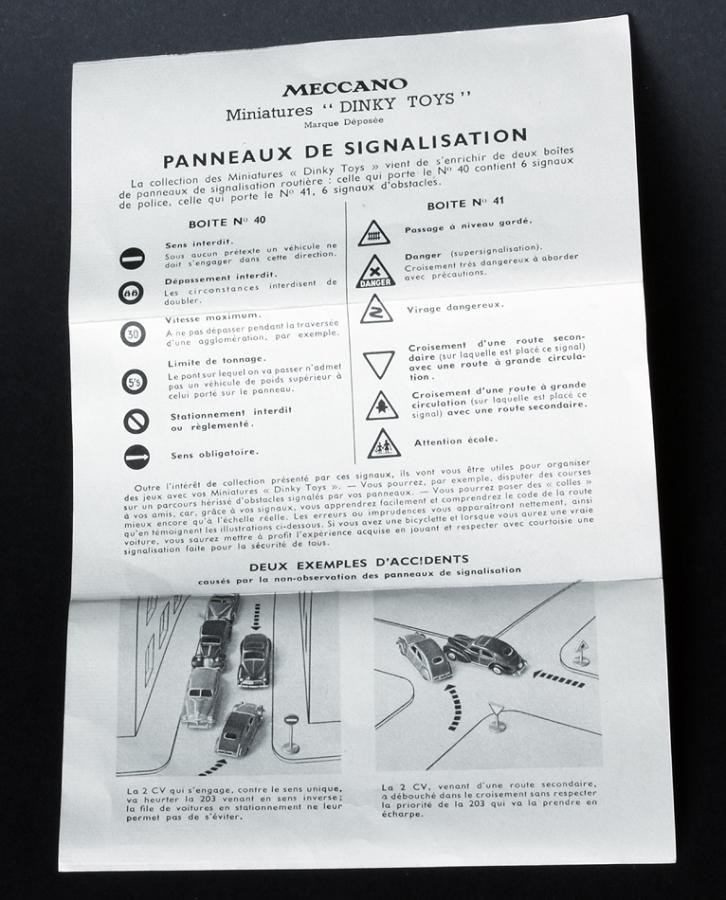
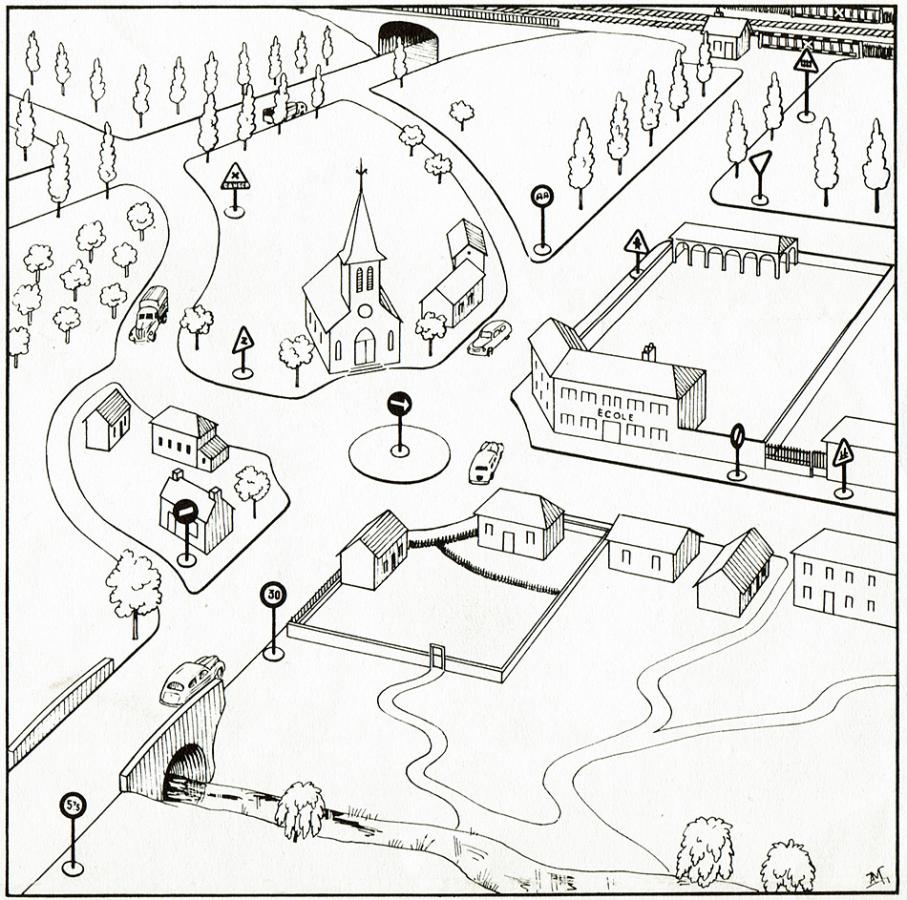
This French set of Road Signs consists of six items, each 5,5 cm high, box 16 x 8 x 2,5 cm, from left to right: -Sens interdit. Sous aucun prtexte un vhicule ne doit sengager dans cette direction (One Way Road No Entry). -Dpassement interdit. Les circonstances interdisent de doubler (Overtaking Prohibited). -Vitesse maximum. A ne dpasser pendant la traverse dune agglomration, par example (Speed Limit). -Limite de tonnage. Le pont sur lequel on va passer nadmet pas un vhicule de poids suprieure celui port sur le panneau ( Maximum Weight Permissible). -Stationnement interdit ou rglement (No Park-ing). -Sens obligatoire (Keep Right).Roulet refers to this set as being mentioned 11/1952 already, but it was actually available as late as June 1953. Both French sets, 40 and 41, are seen mentioned in the French 1953 catalogue as Nouveauts. The announcement in 1952 (if correct) was unbelievably early, because the (British) design of these road signs dates of January 1953: Job nr. 7691 International Road Signs (No Entry, Over-taking Prohibited, Maximum Speed, Max Weight, Proceed in ? Only) AND Job nr. 7690 International Road Signs (Level Crossing, School, X-Roads without Priority ? with Priority, S-Bend, X-Roads), both of 21 January 1953. The two jobs happen to exactly coincide with the split of the Bobigny sets: job 7691 for 40 and job 7690 for 41. Of course the Liverpool set (no. 771 International Road Signs) was not split, forming an undivided full dozen of signs in one lid box. The French and the British signs are exactly the same, with an ignorable difference in paint shades. The cast in text underneath, however, is different, England having been replaced by Fab en France. The lid box is all yellow and the printing is in black. Both longer sides bear the address of Meccano France: Meccano, 70 88, Avenue Henri-Barbusse Bobigny (Seine), the short sides showing the article name and catalogue number, the latter surrounded by the contour shape of the prevailing signs inside: VILLE with number 40 in a circle and ROUTE with number 41 in a triangle on the box of the complementary set 41 in red. Both lack an illustration on top, contrary to the English set, demonstrating thereby also the preferable order of the signs to be put back in the box (for the French signs one might rely on the pictures of the contents in the French Dinky Toys catalogue). The card board base is provided with six cut-outs in order to keep the silver bases of the road signs pinned in place. At first the header read: Miniatures Dinky Toys No. 40, after that: Dinky Toys No. 40 and, after renumbering in 1959: Dinky Toys 590. Final examples show no header at all. Similar header variations can be found for set 41. Loose inside, folded in three, printed in black and white, we find an inventory leaflet of the specific named signs (the same leaflet for both sets) and on verso a road layout as an instruction for the correct use of the signs. Both sets had a very long life, 1953 to 1968/69, much longer than the British counterpart International Road Signs, no. 771, which was discontinued in 1964 already. Since 1959 that one was accompanied with the large, more modern set especially for British use: no. 772 British Road Signs (and the en de part sets 766, 767, 768 en 769). However, that one didnt last longer than 1964 either. According to Roulet (pages 436-437) the French sets were not produced by the Bobigny Meccano factory, but by a subcontractor firm Fonderie Roger, P.R., of Pierre Roger, which issued peculiar models like the vans Waterman and Le Chat. No doubt the English signs in the 771 set were manufactured in the Liverpool Meccano factory. The dies may have crossed the Channel every now and then (IF they are the same dies). These sets are not very expensive and easy to find nowadays, because so many were made in the long time span 1953-1969 and because of the ample availability of replica issues. Comments, corrections and additions welcome! Kind regards, Jan
Please Log in or Create an account to join the conversation.
Time to create page: 1.642 seconds
